Eelgrass-Friendly Moorings Project
Join the cause
We are actively looking for more participants for the Eelgrass-Friendly Moorings Project.
Through a generous grant provided by the Great Harbor Yacht Club Foundation, the NLWC is pleased to offer subsidized transition costs from traditional moorings to eelgrass-friendly moorings for up to 25 eligible participants. Interested parties are encouraged to apply by completing the form accessible at the link below.
Eelgrass-Friendly Moorings Project
On Monday, June 29th, 2026, the Nantucket Land & Water Council (NLWC) officially began installing eelgrass-friendly moorings throughout our pilot site in Nantucket Harbor. This effort was done in collaboration with Nantucket Harbormaster Sheila Lucey, Anderson’s Stillwater Moorings, & Nantucket Moorings, and has been made possible by a generous grant from the Great Harbor Yacht Club Foundation to support eelgrass-friendly moorings in Nantucket Harbor.
Eelgrass on Nantucket
Eelgrass-friendly moorings are a way to protect Nantucket’s vital eelgrass habitat.
As our island community searches for answers to more severe storms and rising seas, we can look to nature for solutions that have been working for Nantucket for thousands of years.
Eelgrass is a marine flowering plant that provides the foundation for our harbor environment. The value of eelgrass meadows is well documented and includes stabilizing sediments, reducing wave energy, serving as a “carbon sink” to help offset our carbon footprint, and improving overall water quality. Eelgrass meadows also provide critical habitat for many commercially important and/or endangered species, such as the last commercially viable “wild” bay scallop fishery in the U.S.
In previous years, eelgrass health surveys had shown a significant decline in Nantucket's eelgrass population. Significant efforts have been taken by the NLWC to restore Nantucket’s eelgrass in collaboration with Boston University, and the Nantucket Natural Resources Department. The NLWC, led by Dr. Alyssa Novak, a Research Assistant Professor at Boston University, and with extensive support from a wide range of community partners,including the Town of Nantucket, Anderson’s Stillwater Moorings, the Sunken Ship, and countless volunteers, has successfully transplanted over 15,000 shoots of eelgrass from donor sites to the half-acre restoration area in Nantucket Harbor.
With restoration efforts still ongoing, one of the main issues that affects our eelgrass is the negative effects from traditional boat moorings in eelgrass meadows.
Traditional Boat Moorings
Traditional boat moorings utilize a mushroom anchor and a heavy chain that disturbs the harbor floor. As wind, tides, and currents move boats and moorings, the chain drags on the harbor floor creating a circular scour – a place where eelgrass cannot grow.
While the NLWC wants and encourages exploration and recreation in Nantucket's waters, it should not come at the cost of our vital eelgrass meadows. Eelgrass-friendly moorings offer a solution that allows us to continue using and enjoying boats as we always have in Nantucket Harbor.
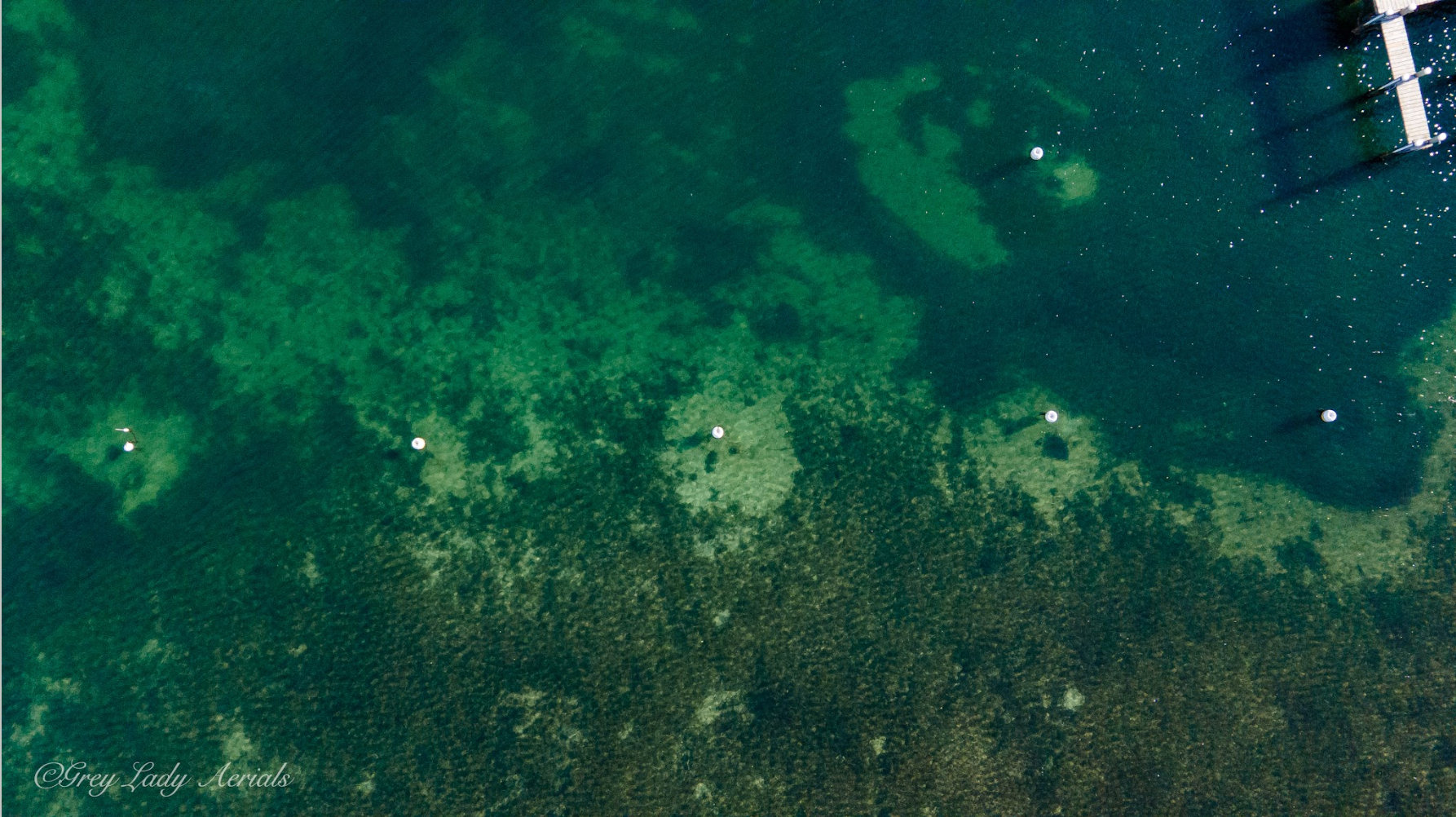
Eelgrass scour from traditional boat moorings courtesy of Grey Lady Aerials
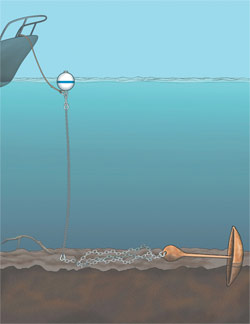
Traditional boat mooring graphic
Eelgrass-Friendly Moorings
The eelgrass-friendly moorings use a pyramid style Dor-Mor anchor and an eco-rode elastic rope replacing traditional chain and mushroom anchors.
The eco-rode elastic rope does not sink to the harbor floor; it floats in the water above eelgrass meadows. This eliminates the possibility of scour caused by heavy chains.
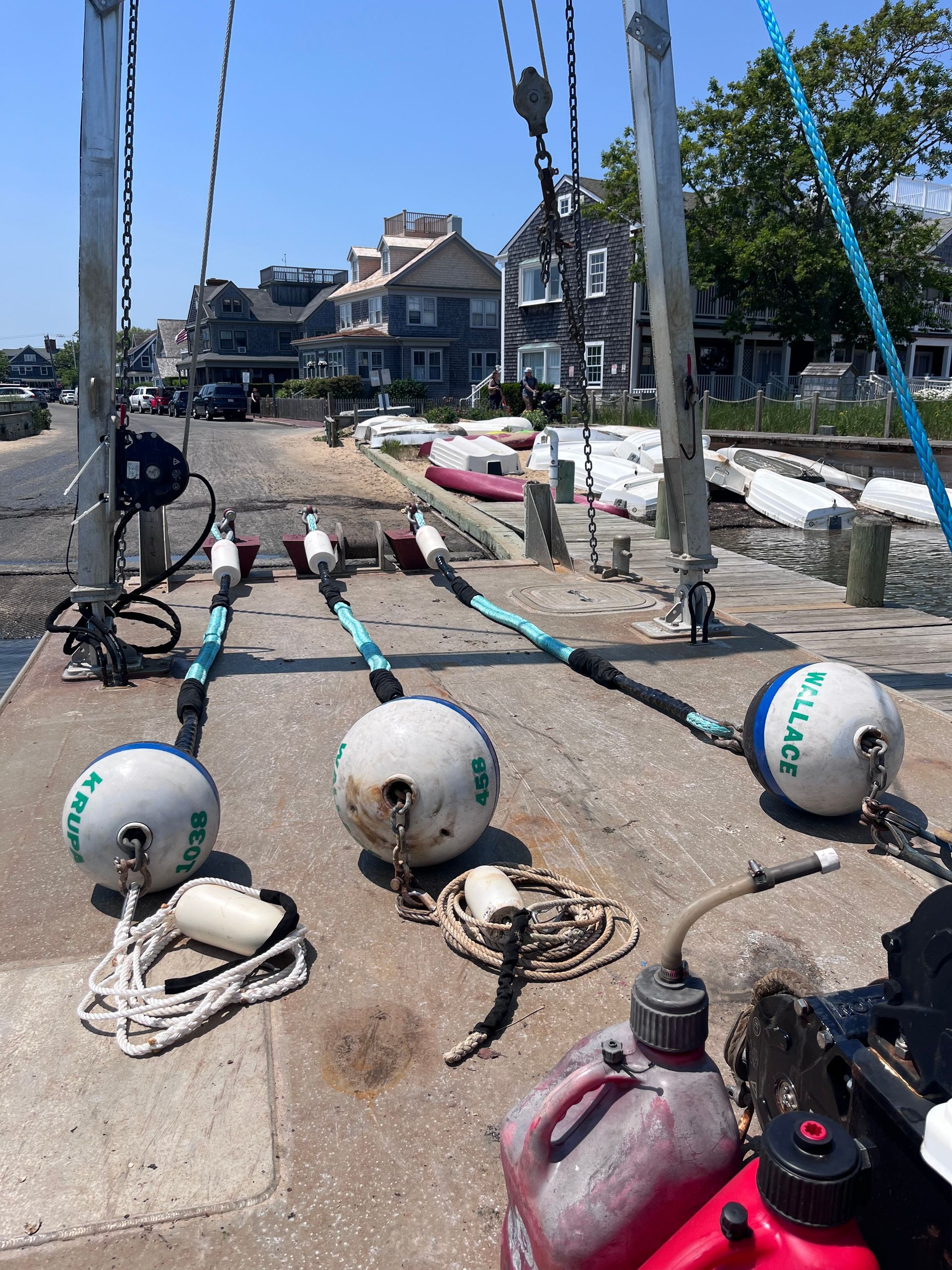
Recent eelgrass-friendly
moorings loaded onto a barge
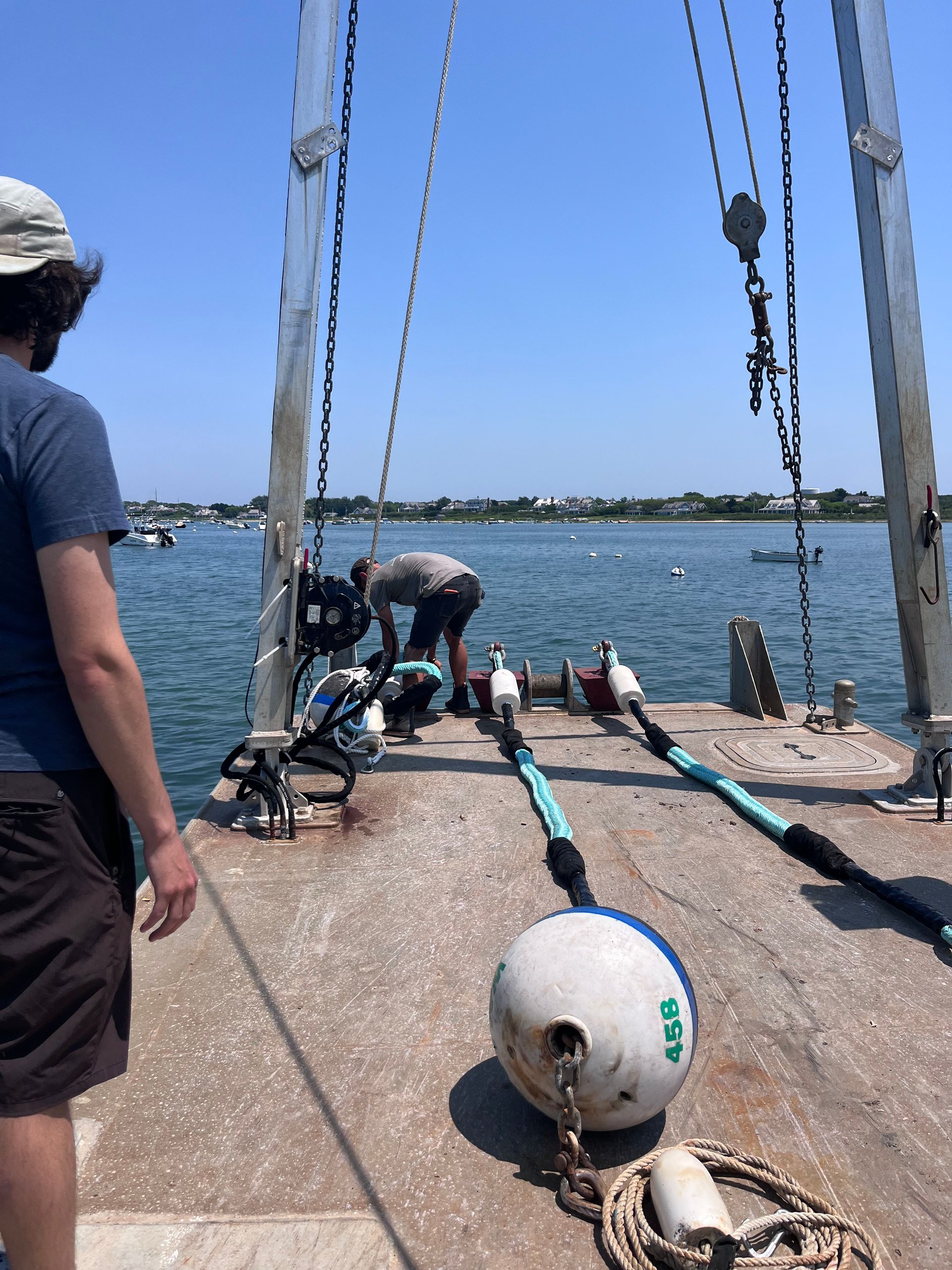
Eelgrass-friendly mooring installation
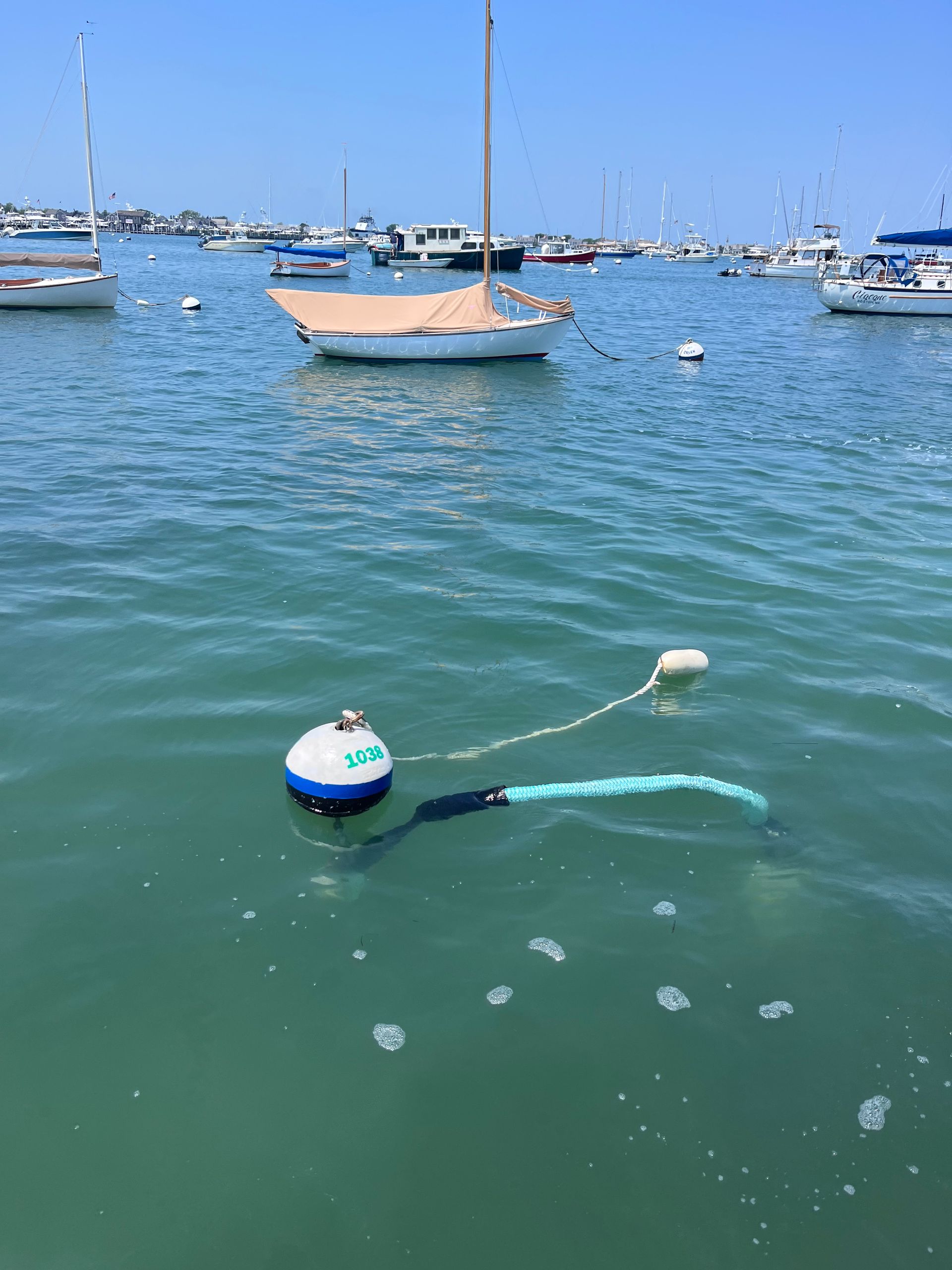
Eelgrass-friendly mooring in the pilot site in Nantucket Harbor
Taking Action
The NLWC has successfully secured the Nantucket Waterkeeper boat utilizing an eelgrass-friendly mooring for the past 3 seasons.
"We are thrilled to have the first of these innovative moorings installed in Nantucket Harbor, and are actively seeking more participants in the program. Thousands of square feet of harbor that could currently sustain healthy eelgrass are scoured clear by our traditional moorings. But boat owners need not fret! By converting to elastic rode instead of chain, you can now help keep the eelgrass beneath your boat each summer more happy and healthy. We can't thank the Great Harbor Yacht Club Foundation enough for their generous financial support, which is allowing us to have our eelgrass and go boating, too."
—RJ Turcotte, Nantucket Waterkeeper
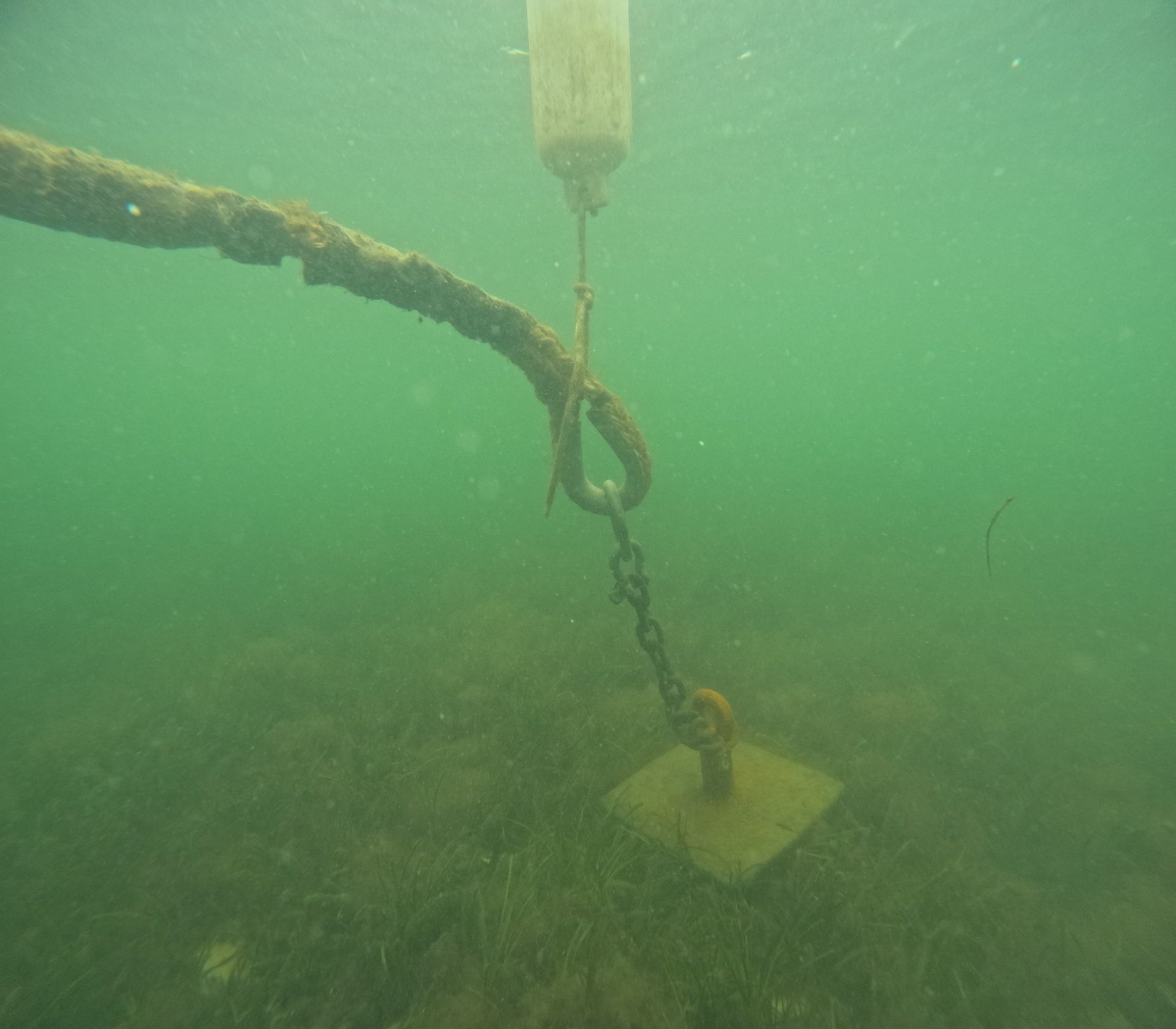
The NLWC's Waterkeeper boat's
eelgrass-friendly mooring
Through a generous grant provided by the Great Harbor Yacht Club Foundation, the NLWC is pleased to offer subsidized transition costs from traditional moorings to eelgrass-friendly moorings for up to 25 eligible participants. Interested parties are encouraged to apply by completing the form accessible at the link below.
The Nantucket Land & Water Council extends its sincere appreciation to the Great Harbor Yacht Club Foundation for their foresight, vision, and generous support for innovative solutions that protect the island’s land and water through science, advocacy, and community engagement.
“The Foundation prioritizes projects that deliver both immediate and long-term benefits to Nantucket Harbor’s ecosystem and our community at large. These new eelgrass friendly moorings accomplish both. We couldn’t be happier to team with NLWC on this impactful initiative and applaud Emily Molden’s leadership.” Ed Orenstein, GHYC Foundation President
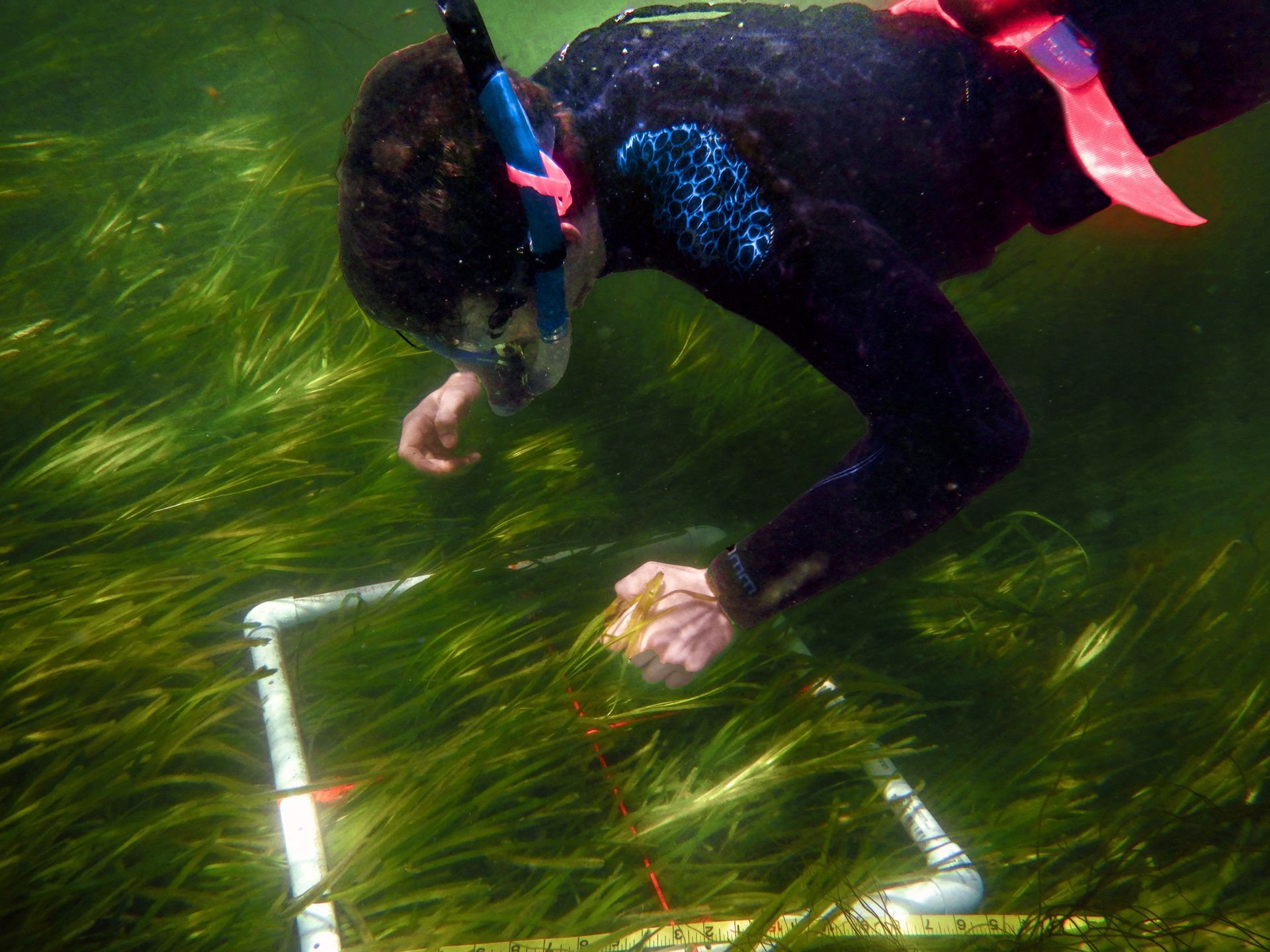
Eelgrass Health Assessment being performed by Eelgrass Program Manager Zack Anderson