NLWC News


MA DEP Visits Geotube Expansion Site in Sconset

Anna Day • July 31, 2025

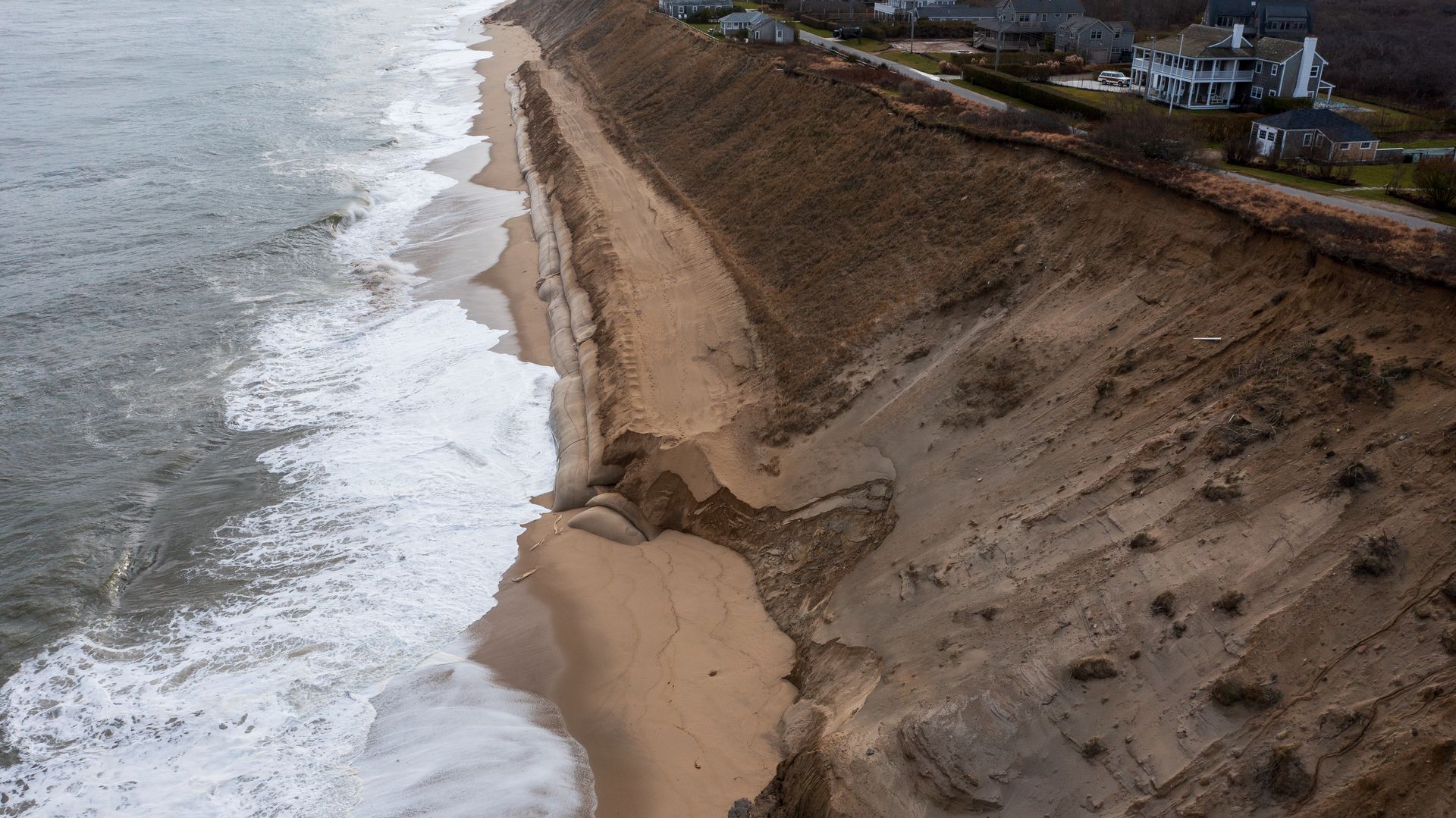
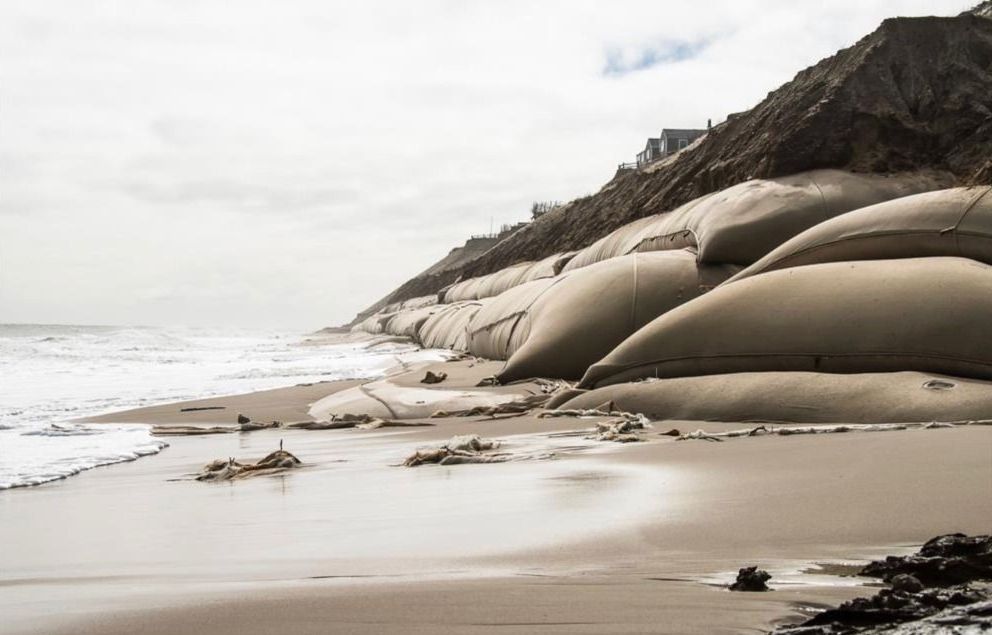
In April 2025, the Nantucket Land & Water Council (NLWC) joined over a dozen Nantucket residents—including members of the Nantucket Coastal Conservancy, property owners in Quidnet, and the Greenhill family—in filing a Request for a Superseding Order of Conditions (SOC) with the Massachusetts Department of Environmental Protection (MassDEP). This action was taken in response to the positive Order of Conditions issued by the Nantucket Conservation Commission on March 20, 2025, which approved a three fold expansion of the ’Sconset Bluff Geotube project.

On Monday, June 23, Whitney McClees, Environmental Analyst with MassDEP, conducted a site visit to inspect the area in ’Sconset where the proposed geotube expansion would take place. This site visit is part of the state’s permitting process under the Massachusetts Wetlands Protection Act, which was triggered by two separate SOC filings: one from the owners of two Baxter Road properties and the other joint request from the NLWC and the resident coalition a.k.a. “The Residents Group.”

The NLWC has long opposed the geotube project and any proposed expansion, based on several key concerns. Chief among them is that the project—even with the current conditions—fails to meet the performance standards outlined in the state’s Wetlands Protection regulations. Analyses conducted by NLWC’s coastal consultant, as well as the Greenhill family’s engineering consultant, used SBPF’s own monitoring data to show that:

  • The existing geotubes have caused significant damage to adjacent public beaches, at times eliminating a walkable beach in front of the structure.
  • The geotubes have accelerated erosion of the coastal banks to the north.

Additionally, the geotube structure remains out of compliance with its original permit due to SBPF’s failure to provide the required mitigation sand since 2016. This ongoing violation led the Conservation Commission to issue a removal order, which was upheld by Superior Court and remains outstanding.

To help brief Ms. McClees ahead of the visit, The Residents Group prepared a detailed Pre-Briefing Slide Deck, which outlines the major issues of concern and includes hyperlinks to supporting documentation.

Click HERE for our Geotube Project Pre-Briefing Slide Deck

The SOC filing has also triggered a requirement for the project proponents to submit documentation to the Massachusetts Environmental Policy Act (MEPA) Office. MassDEP will not advance its review of the SOC until MEPA review is complete.

If you’re interested in learning more about this project, please review the Geotube Project Pre-Briefing Slide Deck and stay tuned for further updates!
February 25, 2026
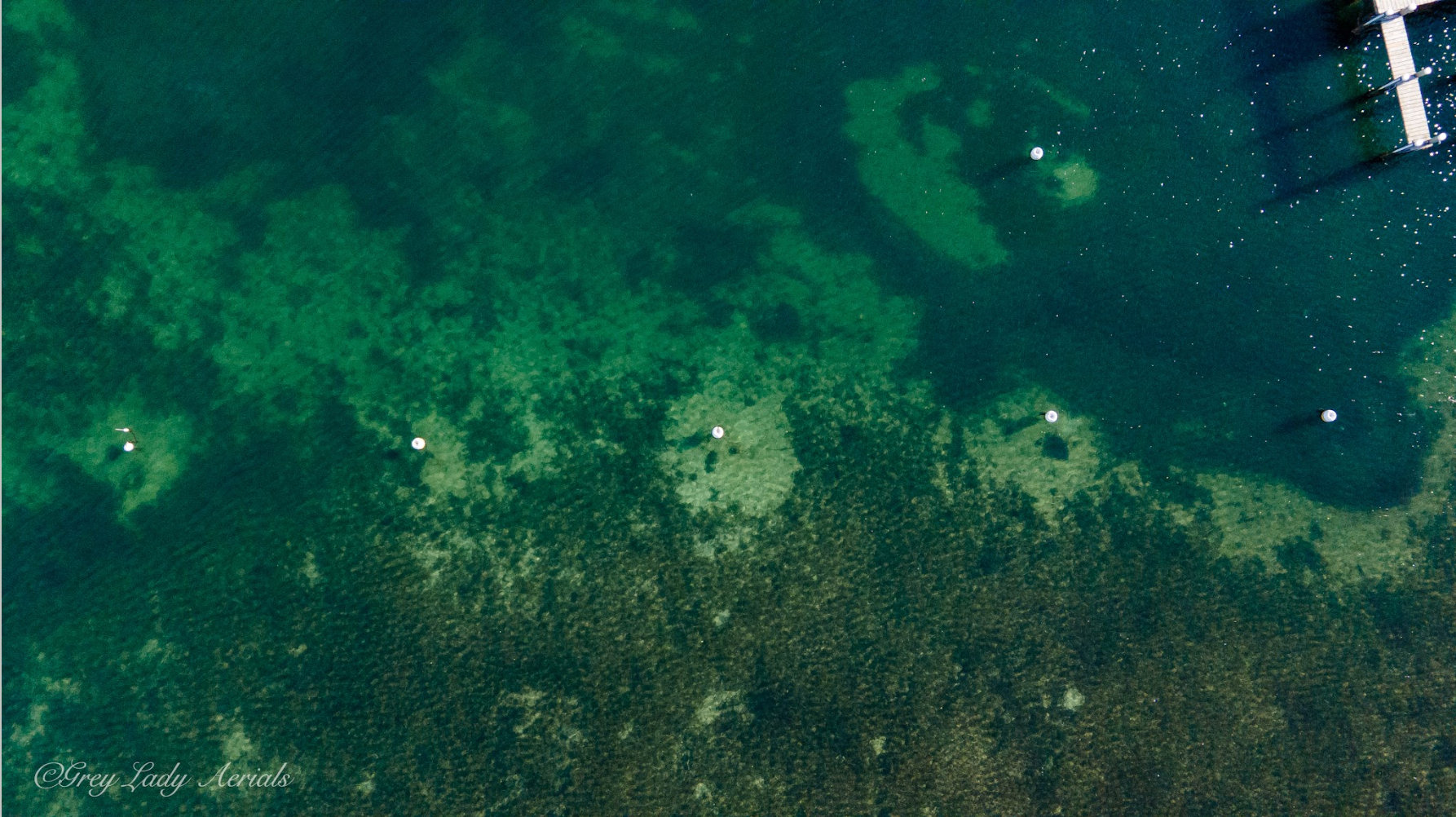
New partnership will transition conventional moorings in Monomoy to protect and restore Nantucket Harbor habitat The Nantucket Land & Water Council (NLWC) has received a generous grant from the Great Harbor Yacht Club Foundation to support the installation of eelgrass-friendly moorings in Nantucket Harbor, a major step forward in protecting one of the island’s most important marine habitats. Healthy eelgrass is essential to the vitality of Nantucket Harbor. Eelgrass meadows provide critical habitat for wild bay scallops and juvenile fish, improve water quality by filtering polluted runoff, absorb excess nutrients, store carbon, and stabilize shorelines against erosion and storm surge. Yet eelgrass in Nantucket Harbor has declined significantly in recent decades due to nutrient pollution, warming waters, and physical disturbance — including abrasion from traditional boat moorings. Since 2018, NLWC has worked with Harbormaster Sheila Lucey and her team, the Town of Nantucket and island partners on eelgrass restoration initiatives aimed at reversing this decline. One of the most practical and immediate solutions is transitioning conventional chain moorings to eelgrass-friendly systems — a key recommendation of the newly adopted Nantucket Eelgrass Management Plan. In 2022, NLWC partnered with Nantucket Harbormaster Sheila Lucey and Anderson Stillwater Moorings to design and implement an environmentally-sensitive mooring system adapted for Nantucket’s unique needs. The design uses a 300-pound pyramid anchor and an eco-rode that keeps gear suspended above the seabed, preventing the heavy chain “scouring” that destroys eelgrass beds around traditional moorings. The NLWC Waterkeeper vessel has been successfully secured using this mooring system for three consecutive seasons. Thanks to generous funding from the Great Harbor Yacht Club Foundation, NLWC and the Harbormaster’s Office will now launch a pilot program this spring, in partnership with local mooring companies, to transition up to 25 conventional moorings to eelgrass-friendly systems. Ed Orenstein, GHYC Foundation President, states: “The Foundation prioritizes projects that deliver both immediate and long-term benefits to Nantucket Harbor’s ecosystem and our community at large. These new eelgrass-friendly moorings accomplish both. We couldn’t be happier to team with NLWC on this impactful initiative and applaud Emily Molden’s leadership." NLWC will monitor the pilot sites to measure eelgrass recovery and seabed stability, with the goal of informing future harbor management decisions and expanding the program if successful. “Eelgrass is the foundation of our harbor ecosystem — without it, we lose scallops, water quality, and coastal resilience. The beauty of eelgrass-friendly moorings is that they solve a problem without restricting boating. This project shows conservation and harbor use can work together for the betterment of our environment and to the benefit of our community, and we hope it becomes a model for broader adoption.” – RJ Turcotte, Nantucket Waterkeeper The Nantucket Land & Water Council extends its sincere appreciation to the Great Harbor Yacht Club Foundation for their foresight, vision, and generous support for innovative solutions that protect the island’s land and water through science, advocacy, and community engagement.
February 4, 2026
If you feel aligned with our mission and would like to support our work through advocacy, there are many meaningful ways to get involved. You can attend local regulatory meetings, participate in and speak at Annual Town Meetings, serve as an informed environmental ambassador among friends and neighbors, rally support for articles that protect Nantucket’s natural resources, and oppose those that pose risks to their long-term health. You can also lend your voice by drafting or signing Letters to the Editor. If you’re interested in participating in our advocacy efforts as a Community Advocate, please click H ERE.
December 22, 2025
As the end of the Fall season approaches, we would like to take some time to reflect on Nantucket’s recent Special Town Meeting, held on November 4th. The Nantucket Land & Water Council has been engaged in Nantucket’s discussion about short-term rental (STR) policy and regulation for many years. As an organization, we have, at times, faced questions from residents about the relevance of STRs to the NLWC’s mission . The NLWC’s mission is to help preserve the long-term health of Nantucket’s environment and community through the protection of our land and water resources. Development impacts the environment. This simple fact should come as no surprise. Our actions on the land have a direct impact on the health of our waters. Nutrients like nitrogen and phosphorus from septic systems and fertilizers, along with other contaminants such as those found in stormwater runoff, don’t just disappear. They travel through the soil and into our ponds, harbors, and drinking water. The accelerated development, repurposing of properties, and intensity of use associated with short-term rentals (STRs) as a business put increasing pressure on the island’s infrastructure, reduce habitat and biodiversity, and endanger our water quality. Of course, a community needs to change and develop and grow, but the health of our environment and the ability of a place to naturally support the people who live there are directly related to the intensity and type of development and growth that we, as a community, choose to allow and encourage. The NLWC has always made it clear that we are not opposed to all short-term rentals. We support the ability of island residents to short-term rent with reasonable restrictions. We have, first and foremost, sought to reduce the impact from investor-owned STRs, and reduce the intensity of use and development from properties that are maximized solely for the use of short-term rentals because of the cumulative environmental impacts that this type of use and development creates. We were very disappointed by the November STM vote, which resulted in the full codification of short-term rentals across all residential zoning districts of the island. It is clear that much of the community was incredibly alarmed by the simple messaging provided by Article 1 proponents that asserted this was a matter of maintaining an important property right or losing that right. Alternatively, we, as proponents of Article 2, attempted to communicate a more nuanced message that memorializing this right with reasonable restrictions would actually allow most residents to continue short-term renting in a meaningful way while helping to protect the future of our environment and community. As the dust settles, and our media expresses the reality of the inadequacy of our existing regulations ( https://nantucketcurrent.com/news/nantucket-banned-corporate-owned-short-term-rentals-a-loophole-is-allowing-them-to-continue ) , there is clearly more that needs to be done. All of our policies and practices relative to growth, development, and land and resource management , including STR regulations, must be scrutinized for their impact on our shared natural resources and adjusted where needed to protect the health of our environment and community. It is easy to make the claim that STRs as an issue is not “in our lane” and to suggest that how we use and develop our properties are somehow separate from: PFAS issues, contamination of our public water supply, nutrient pollution, and water conservation , but these are the exact concerns that compel the NLWC to engage in community conversations about growth, development, land use, and STRs. We are the voice for Nantucket’s environment, working to safeguard the present health and future sustainability of the island. This is our lane. We thank all of our members and friends for your support , regardless of your position or vote at STM. We know that, despite differences in opinion, we all share a deep care for this special place and a desire to protect what makes it unique. Together, we can shape policies that reflect both the needs of our community and the limits of our fragile island environment. Your willingness to stay engaged—ask questions, share concerns, and offer ideas—continues to strengthen our efforts. There is more work to do, and we look forward to doing that work with you.
MORE NEWS