NLWC News
Nantucket Land & Water Council's 2026 Annual Town Meeting Recommendations
The Nantucket Land & Water Council has completed our annual reviews of the warrant in advance of the 2026 Annual Town Meeting in order to provide comments and recommendations on articles that impact the health of our island environment. Our review is conducted in the context of our mission to preserve the long term health of Nantucket's environment and community through the protection of our land and water resources.
The NLWC's complete ATM Recommendations sheet can be found HERE. It can also be found in the 4/30 edition of the Inquirer & Mirror, and will be available as a hand out outside the NHS auditorium.
Please find additional information on the following articles below:
Article 12: COMMENT - Appropriation: School Athletic Facilities Improvements
NLWC Recommendation: COMMENT - The NLWC recognizes that our community has many important needs, including investing in our students and athletic facilities. We also have a responsibility to ensure that projects of this scale, particularly those located within our public wellhead recharge district, do not compromise the long-term health of our drinking water. From the perspective of our mission to protect the island’s environmental resources, the NLWC cannot support the proposed artificial turf and synthetic track components of this project because preliminary testing for PFAS has not been completed on all materials, and there has been no clear and comparable cost/benefit analysis of the originally proposed natural grass field alternative. While the NLWC will continue to work with the Nantucket Public Schools and Nantucket Health and Human Services Department to establish meaningful testing standards and monitoring protocols, it is important to recognize that these measures may help reduce risk from PFAS and microplastics but will not eliminate it. There is not enough information to make an informed decision at this time.
The NLWC recognizes that our community has many important needs, including investing in our students and athletic facilities. We also recognize that Article 12 includes a number of different infrastructure improvements. The NLWC’s interest in Article 12 is solely focused on the environmental impacts of the proposed artificial turf field and synthetic track.
The NLWC has engaged in School Committee and Board of Health discussions on the school athletic facilities, following the introduction of artificial turf last fall (2025) as an alternative to natural grass for the Vito Capizzo Stadium project. We are working with the Horsley Witten Group to specifically review available information on the artificial turf field and synthetic track. Throughout these meetings, the NLWC has emphasized the community’s responsibility to ensure that projects of this scale, particularly those located within our public wellhead recharge district, do not compromise the long-term health of our drinking water.
It is clear from existing data and dialogue at the public Board of Health meetings that the materials proposed will leach some amounts of PFAS (per and poly-fluoroalkyl substances) and micro/nano-plastics. These substances are already present throughout our environment, making it all the more important to avoid introducing new, preventable sources. The question before our community now is: how much more is acceptable to add? Without a specific regulatory framework or permit review, there has been no requirement for a project alternatives analysis like we often see in other cases.
In the absence of that framework, the NLWC has focused on identifying appropriate testing requirements and standards to minimize risk should the project move forward. Unfortunately,
no comparable and clear analysis of the feasibility and risk
of the alternative natural grass field that NPS first proposed to the School Committee last fall
has been provided.
Both natural grass and artificial turf fields require significant maintenance, though the types of inputs and management practices differ. In the case of artificial turf, management often includes grooming, cleaning, and disinfecting. In the case of natural grass, conventional management often includes use of fertilizers and chemicals to treat the grass, encourage growth, and control disease. Organic natural grass management has been very successful in other communities which can reduce the need for these inputs. Both surfaces will require ongoing maintenance and carry their own costs and risks. The inputs from natural grass can be accounted for and adjusted over time. By contrast,PFAS or micro/nano-plastics that enter the environment from artificial turf are more difficult to track, contain, and manage once released into the environment.
The NLWC believes the community could make a more informed decision if side-by-side evaluation had been provided for both natural grass and artificial turf alternatives.
We have met with the Nantucket Public Schools along with their consultants on two different occasions to discuss the proposal and our concerns regarding the materials to be used. We appreciate the effort by Nantucket Public Schools and their team to further develop a testing protocol for the proposed artificial turf field, and their willingness to collaborate with us and consider our input.
While state-accepted standards do not yet exist for these products , we have requested specific testing and standards based on state criteria that do exist for groundwater.
We are also requesting that NPS apply the same testing protocols and standards to the synthetic track materials. While limited data is available on these materials, their reported properties (including water resistance and durability under continuous outdoor use) are consistent with characteristics commonly associated with PFAS-containing products.
The NLWC’s request can be found HERE:
NLWC Proposed Testing & Standards for Artificial Turf
The NLWC is also requesting baseline monitoring to better understand the quality of the existing groundwater, and ongoing monitoring of water leaching through these materials. This monitoring is not intended to be punitive, but to provide the community with a better understanding and awareness, to assist us in making more informed decisions going forward.
Important Clarification on Proposed Stormwater Management:
The NLWC would like to clarify some confusion that we have heard from community members and read throughout the media about the purpose and function of stormwater management for this site.
In the interest of providing the community with accurate information, it is important to understand that stormwater is managed through two primary approaches, conveyance and infiltration. Conveyance refers to stormwater management practices that transport stormwater within and generally through or away from a site - where it is discharged to a surface water body (direct discharge), or to the land surface in a more desirable location. Infiltration refers to stormwater management practices that direct stormwater into the subsurface soil, where it will gradually move through the open pores between soil particles and migrate to underlying groundwater. In sandy soils, typical on Cape Cod and Nantucket, infiltration practices serve the benefit of helping to “recharge” the groundwater table that provides our drinking water. Under both practices, pollutants that are present on the land surface can migrate with stormwater runoff. Temporary beach closures are often a result of bacteria and other pollutants migrating with runoff that is discharged to our ocean/bay areas. In a similar fashion, infiltration practices have the potential to introduce pollutants to the underlying groundwater. Pollutants resistant to naturally occurring processes that allow for eventual reduction or removal (environmental degradation), are often referred to as persistent, with the most persistent pollutants (such as PFAS) commonly referred to as “forever chemicals.”
The artificial turf field proposed for the Vito Capizzo Stadium is designed to infiltrate stormwater into the underlying soil, where it will eventually migrate into the underlying groundwater. Some of the stormwater would be piped to underground leaching structures, some would pass directly through the artificial turf system, and some would be conveyed to low lying areas on the school property (where it would infiltrate). The proposed stormwater system design does provide some treatment for the portion of the stormwater that is directed to the underground leaching chambers, primarily to remove some particle bound pollutants such as phosphorous, nitrogen, metals, and hydrocarbons. It is important to understand that in all of these cases the stormwater will not be “captured” in a way that removes it from the site. It will move back into the surrounding soils and groundwater. This is precisely why the Nantucket Land and Water Council has been an involved party during the ongoing discussion of the project and has advocated for pretreatment technology to help remove pollutants from the water that is piped to underground leaching structures, and why we have been advocating to monitor the water that is directly infiltrating through the turf field materials and back into our soils. The Capizzo Stadium is located within a wellhead protection area (Zone II) for the Nantucket community, and the artificial turf field and synthetic track are approximately 3 acres in size. The NLWC has continued to advocate for stringent and comprehensive testing of the artificial turf and synthetic track materials for PFAS, utilizing the best laboratory analytical methods available, with the goal of reducing uncertainty in evaluating the potential impacts to groundwater that this project may result in.
Article 15: YES - Appropriation: Somerset Sewer Needs Area
NLWC Recommendation: YES The NLWC supports Article 15 which will extend sewer service to the Somerset Needs Area. Portions of this area fall within both the Hummock Pond and Miacomet Pond Watersheds which are designated as impaired water bodies as a result of excess nutrient pollution. A 2014 Massachusetts Estuaries Project study identified wastewater as the most significant nitrogen input to Hummock Pond that is under our community’s control. The NLWC recognizes that this project carries both financial implications for area residents and development implications for the area, but supports this sewer extension for protection and improvement of water quality in these important island ponds. Hummock and Miacomet regularly experience Harmful Algal Blooms, which negatively impact ecosystem services, recreation activities, and community use.
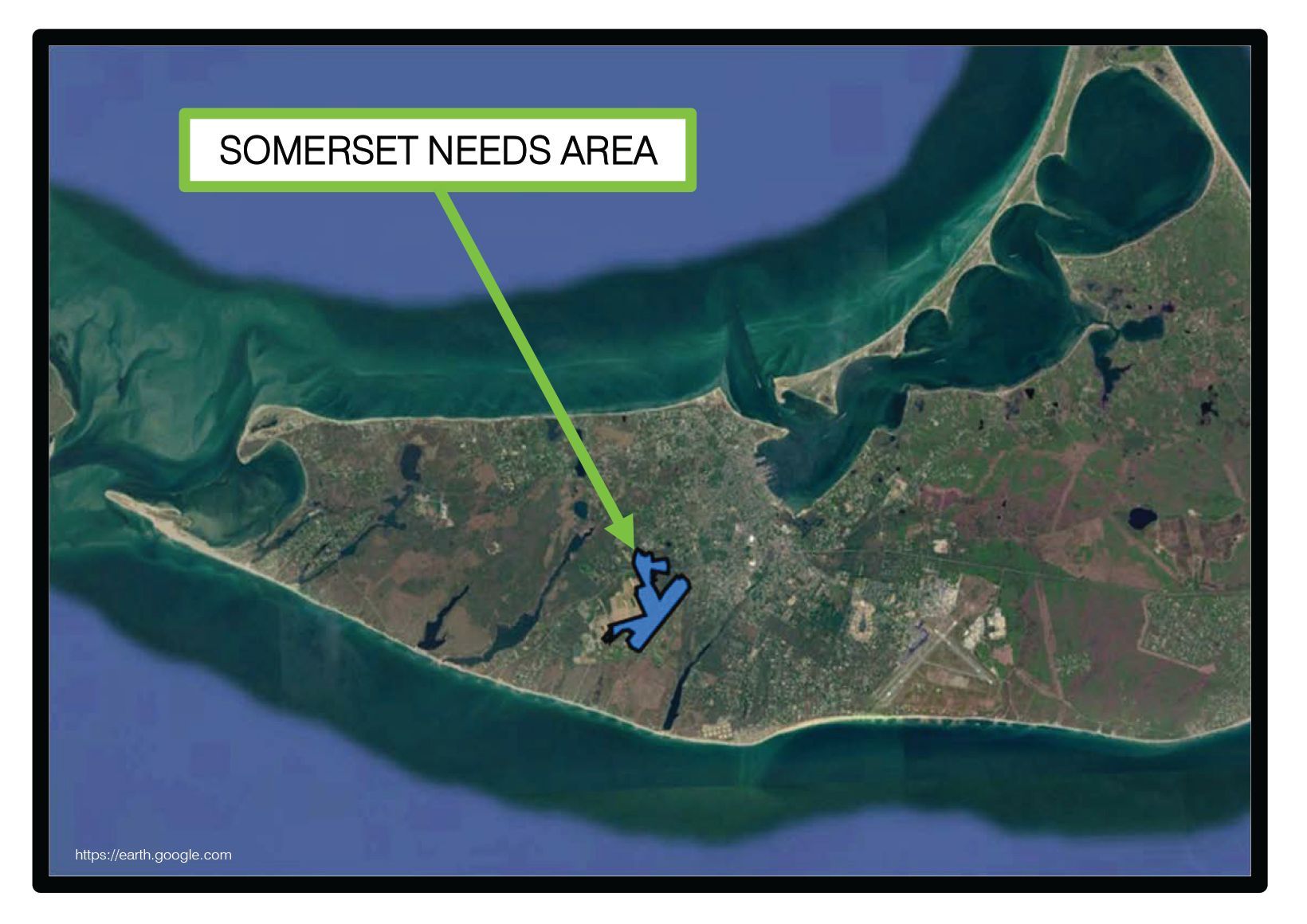
The NLWC supports Article 15 which involves a number of infrastructure improvements including the extension of sewer service to the Somerset Needs Area. Portions of this area fall within both the Hummock Pond and Miacomet Pond Watersheds which are designated as impaired water bodies as a result of excess nutrient pollution.
The Hummock Pond Watershed can be viewed on the Town GIS website utilizing the Water Protection Districts and Sewer Districts Overlays here:
Hummock Pond Watershed Map
The Miacomet Pond Watershed was updated by Woodard and Curran in 2014 and can be viewed here:
Miacomet Pond Watershed Map
More information about these ponds can be found on the Town website as well as in this 2019 Town Report here:
Town of Nantucket Great Ponds Management Principles Report (Chapter 2 = Hummock Pond and Chapter 3 = Miacomet Pond)
A 2014 Massachusetts Estuaries Project study identified wastewater as the most significant nitrogen input to Hummock Pond that is under our community’s control. This Report can be found here (see figure IV-3 page 42 for more information on Hummock Pond's nutrient load):
Massachusetts Estuaries Project - Hummock Pond
The NLWC recognizes that this project carries both financial implications for area residents and development implications for the area. Extending sewer can eliminate existing constraints on a property that is subject to Title V and local septic system regulations opening up properties to higher intensity development. This may include additional bedrooms, maxing out groundcover under existing zoning, and the space to construct a swimming pool where a leaching field had previously been located. These changes can bring their own environmental impacts such as increased impervious surfaces. The implications of these changes on a neighborhood must also be considered.
The Town of Nantucket provides additional information here:
ARTICLE 15
Article 63: YES - Zoning Bylaw Amendment - 41 81L Preexisting Structures
NLWC Recommendation: YES The NLWC supports Article 63 that amends the Zoning Bylaw to address lots divided under the state’s pre-existing structures provision (G.L. c. 41, s. 81L). With these amendments, “81L” lots can still be validly created under zoning, but cannot increase overall density or ground cover.
Article 63 is a citizen’s article submitted by Emily Molden to address a provision of our Zoning Bylaw that has created a number of challenges for the Town and the Community for many years.
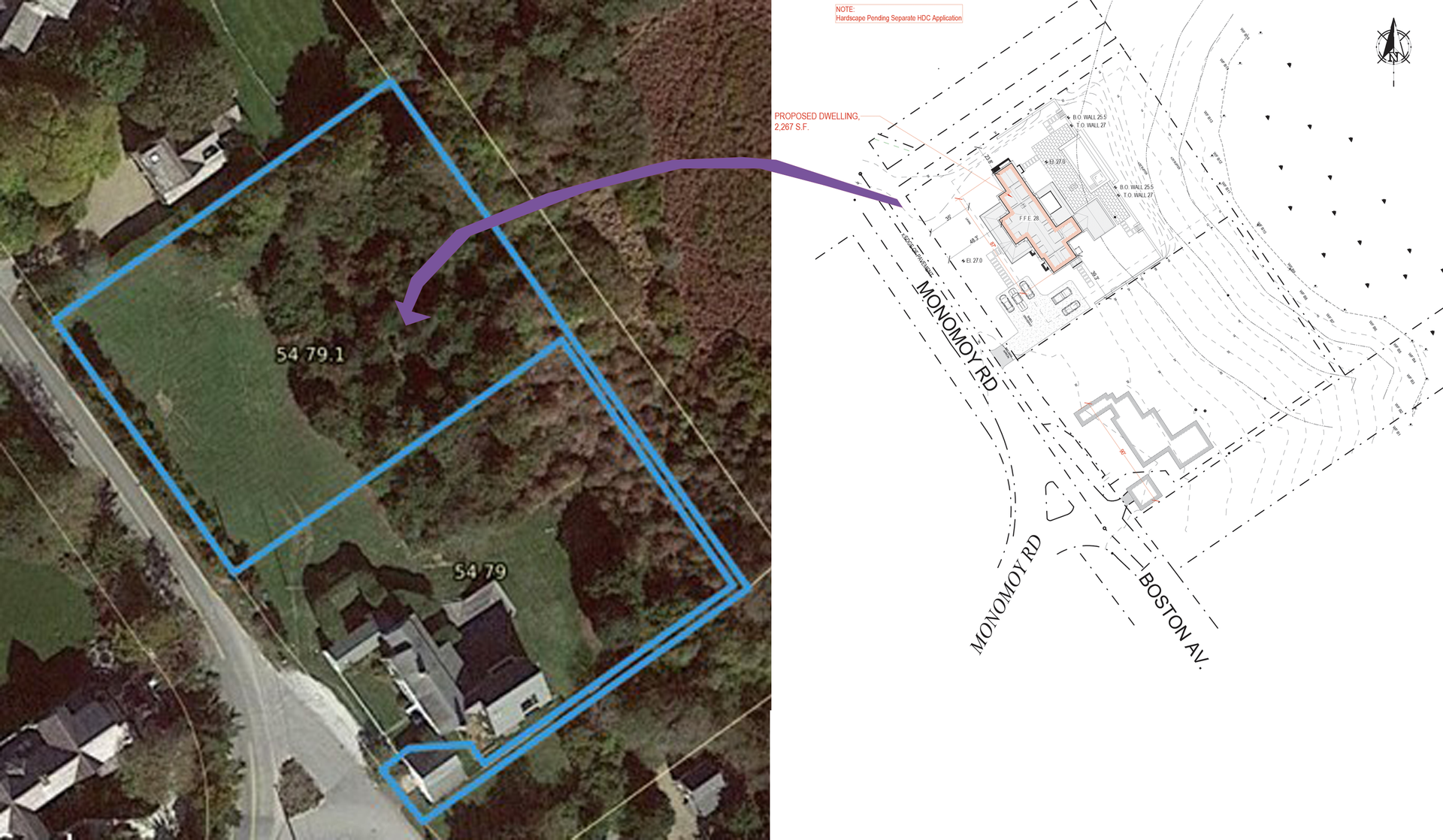
Image of a lot divided under c.41 s.81L on Monomoy Road.
Background:
The state’s Subdivision Control Law contains a provision that allows a property containing two or more structures that predate local subdivision control (1955 on Nantucket) to be divided such that at least one of the preexisting structures exists on each lot.
(It is reasonable to assume that this was included in the state law as a way of avoiding undue hardship from the implementation of this brand new legislation for property owners that already had multiple structures on their property. This provision would allow them to create a separate lot around those preexisting structures. It is unlikely that the legislators could have ever predicted that this provision would still be used over 70 years later.)
Historically, if one of these divisions resulted in the creation of a nonconforming lot (because it was smaller than allowed under existing zoning, for example), a variance would be required from the ZBA in order to redevelop the property.
In 2012, (under a Technical Amendment,) language was added to the Bylaw (Section 139-33(A)(3)) that automatically grants all of these newly created lots, even those which are newly nonconforming, with pre-existing, nonconforming rights. This has eliminated the need for variance relief by the ZBA, and it has resulted in a number of negative impacts that this article aims to address.
In a court case from 2015, Palitz v. Zoning Board of Appeals of Tisbury, the courts made it clear that while the law allows for these divisions it does not grant “buildability”. These newly created lots do not have any vested rights. And Nantucket is the only Town in the state that has ever automatically granted these newly created lots with pre-existing, nonconforming rights.
Reasons for Article 63:
The existing Bylaw lacks safeguards that would help to ensure responsible development. Some of the challenges resulting from the existing Bylaw and process include:
- Insufficient Notification & Oversight
By granting these lots with preexisting nonconforming rights, there has been insufficient abutter notification about these projects, and insufficient zoning oversight - Unplanned Development
There has been an increase in the creation of additional dwellings and lots (never accounted for in buildout, infrastructure planning, etc)
- Environmental Degradation
Additional groundcover has been allowed on these lots beyond what existing zoning would have allowed which equates to more impervious surfaces in our harbor watershed and other sensitive areas (water quality concerns)
- Undermining of Covenant Program
The ability to create and redevelop these lots can undermine the covenant program in certain zoning districts by providing opportunities for market rate lots instead
(The current process involves going before the Planning Board for endorsement of the lot division (which does not require a public hearing or notification). This simply requires documentation that the structures predate 1955. An additional permit may be required from the HDC where justification must be provided that these historic structures can be demolished, relocated, rebuilt, etc. A building permit may also be required for any redevelopment, but in many cases, no further review by the Planning Board or ZBA is required.)
Automatically granting these newly created lots with preexisting nonconforming rights goes against our community’s own planning objectives, which aim to eliminate nonconformity and create more conformity. Newly created lots should be managed and developed in conformance with current zoning at the time the lot is created.
NEW Amendments to Article 63:
Following consultation with island attorney Arthur Reade regarding his and others concerns about the implications of this article, Ms. Molden has agreed to some changes to her proposal. The new amendments will be incorporated into a Technical Amendment presented at the start of Town Meeting. These changes will still ultimately achieve the primary intent of Ms. Molden’s article, which is to address many of the challenges listed above.
The new proposed language can be found here: Technical Amendment for Article 63
Article 63 (with its Technical Amendments) will recognize lots created by the G.L. c.41 s.81L preexisting structures provision as valid lots under zoning, but will eliminate the language granting these lots and structures with preexisting nonconforming rights. The proposal inserts language that will require a Special Permit from the ZBA for any increase in nonconformity with height or setbacks but explicitly prohibits any new dwelling units or any additional groundcover beyond what zoning would otherwise allow on the original lot.
The Planning Board has unanimously supported this article for the second year in a row, and Ms. Molden has received a legal opinion which Town Counsel has agreed with that this will only impact future 41 81L divisions and will not retroactively impact previously created lots.
Article 71:
YES - General Bylaw - Stormwater Bylaw
NLWC Recommendation: YES
The
NLWC supports the Town’s efforts to establish a Stormwater Bylaw to address flooding, water quality impairment, erosion, and outdated infrastructure. This Bylaw will enable the Town to
establish regulations that support ongoing management and maintenance of existing and future stormwater infrastructure
to better protect our natural resources and community.
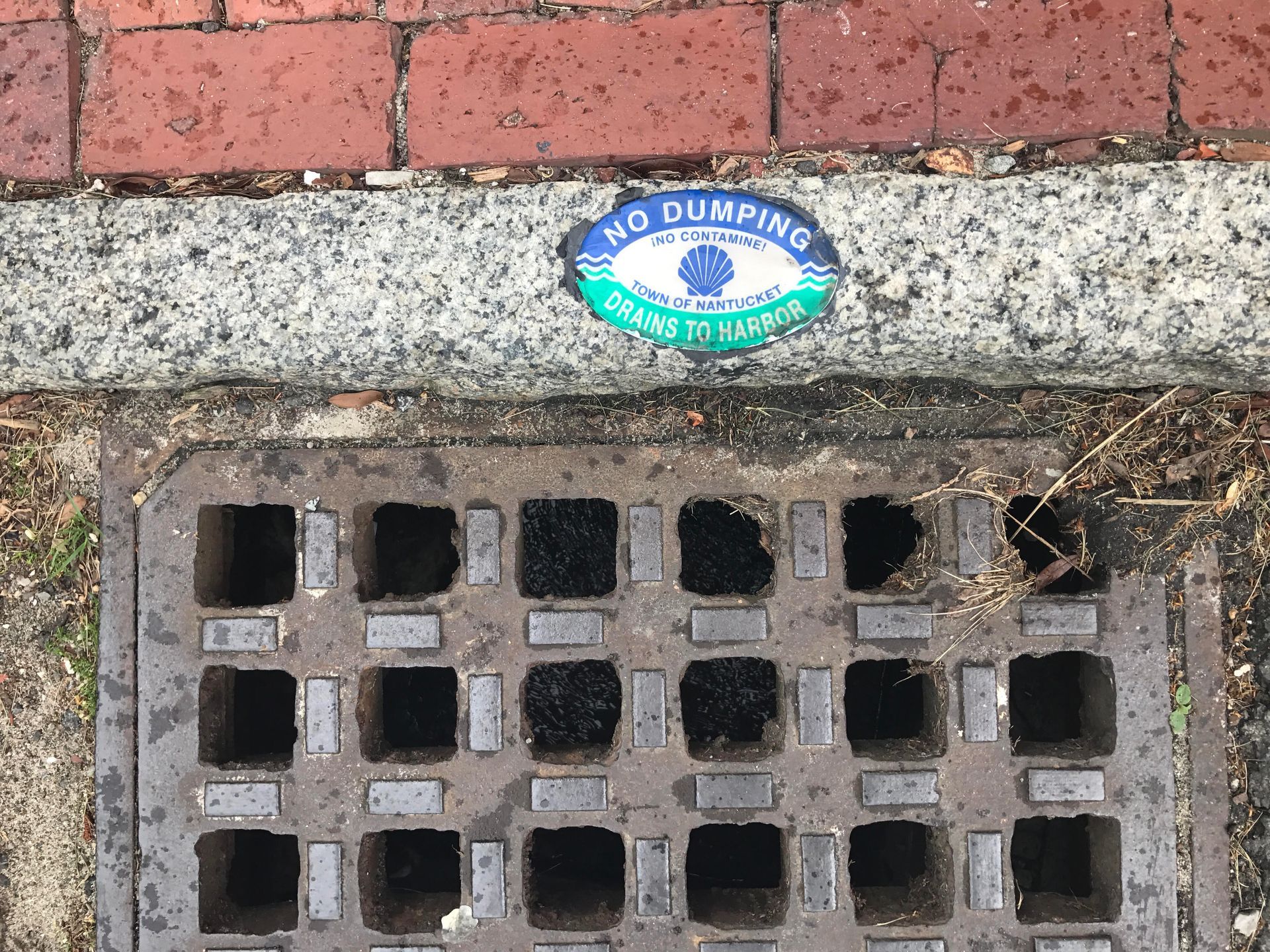
The Town of Nantucket was early and ambitious in its original construction of stormwater infrastructure in the early 1900’s. Unfortunately this now translates to a very antiquated system that is overdue for improvements and upgrades.
Article 71 proposes a new Stormwater Bylaw which will authorize the Town to establish a Stormwater Utility and promulgate specific stormwater standards and regulations. Through the creation of a stormwater enterprise fund the Town will be able to invest in the staff required to properly implement the regulations and manage and maintain critical stormwater infrastructure across the island.
Why We Need to Vote YES on Article 71:
- Stormwater, along with wastewater and fertilizer is a primary contributor of nutrient pollution and other contaminants to our water bodies, including our groundwater, ponds and harbors.
- Recent changes in storm frequency and intensity is inundating our stormwater infrastructure in a way that it has not been designed to handle. Future projections indicate that this inundation and flooding will only get worse.
- Existing state requirements and local Bylaw provisions require stormwater review for some projects, but long term oversight and enforcement of operations and maintenance requirements for permitted stormwater infrastructure is virtually nonexistent.
The NLWC has been requesting the Town to develop a Stormwater Management Plan and Stormwater Regulations for many years
to help address water pollution, flooding, erosion, outdated infrastructure, natural resource protection, and for the health and safety of the community.
Please vote YES on Article 71.
For more information on the Purpose of Article 71 read HERE:
Town of Nantucket Stormwater Management Presentation
Article 73: NO - Real Estate - Lease/License Baxter Road Property for Erosion Control
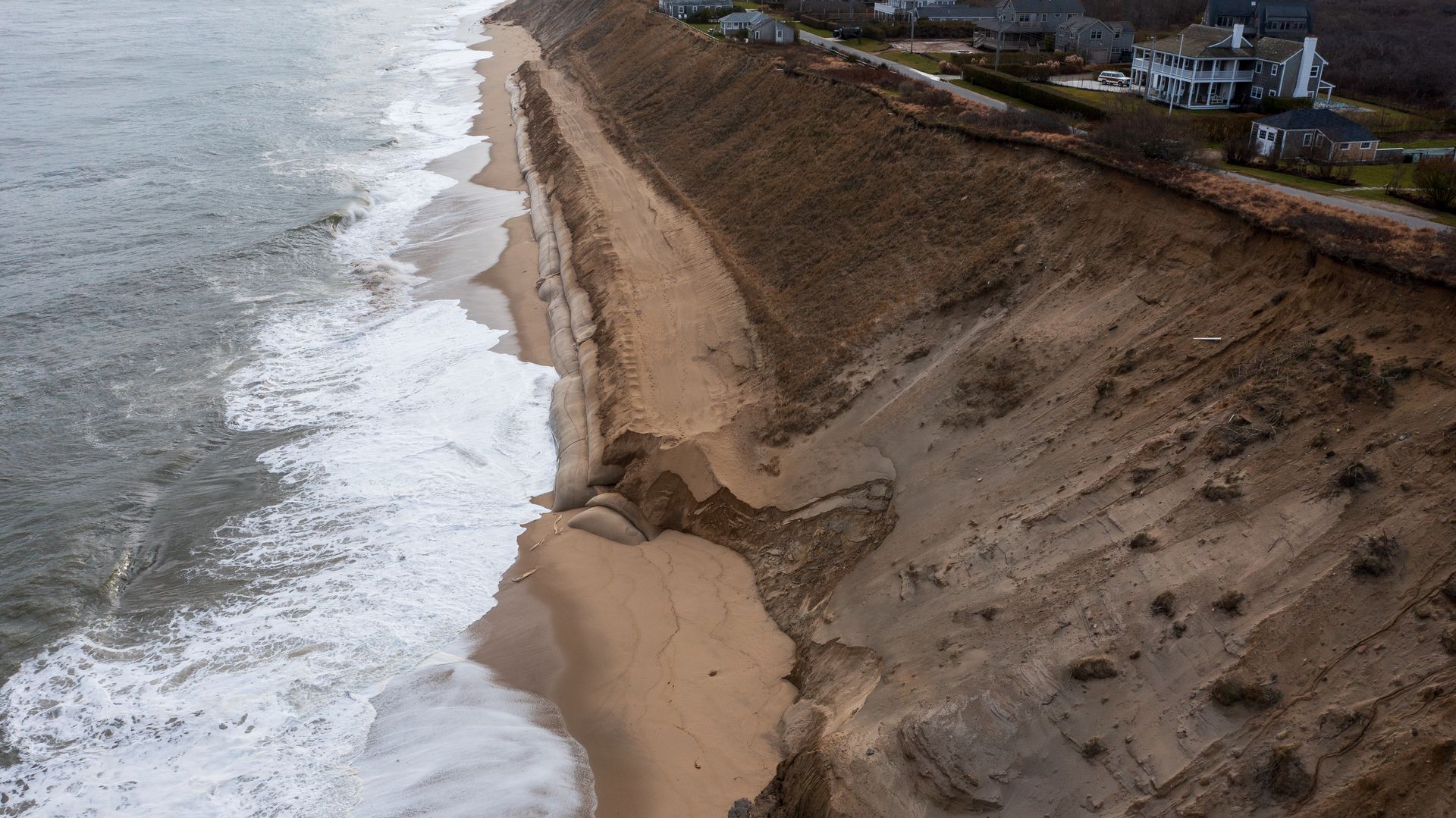
NLWC Recommendation: NO The NLWC does not support the expansion of the geotubes on Sconset Beach, but instead supports temporary measures to hold the line while the Town implements its Baxter Road Alternative Access Plan. This article as drafted is unnecessarily vague and open-ended. It effectively issues a blank check to use the beach for the construction of any coastal engineering structures on Sconset Beach forever into the future. It has no time frame, no limits on the type of structures, or defined location, undermining the intent of Chapter 67-1E, which requires a Town Meeting vote to authorize the duration, location, and type of structures on Town-owned land.
The Massachusetts Coastal Zone Management Agency, and Massachusetts Department of Environmental Protection have specifically identified numerous deficiencies in the project plans and design that have not been addressed. In addition, the project proponents have failed to comply with conditions and requirements in past permits and licenses.
Please vote NO on Article 73.
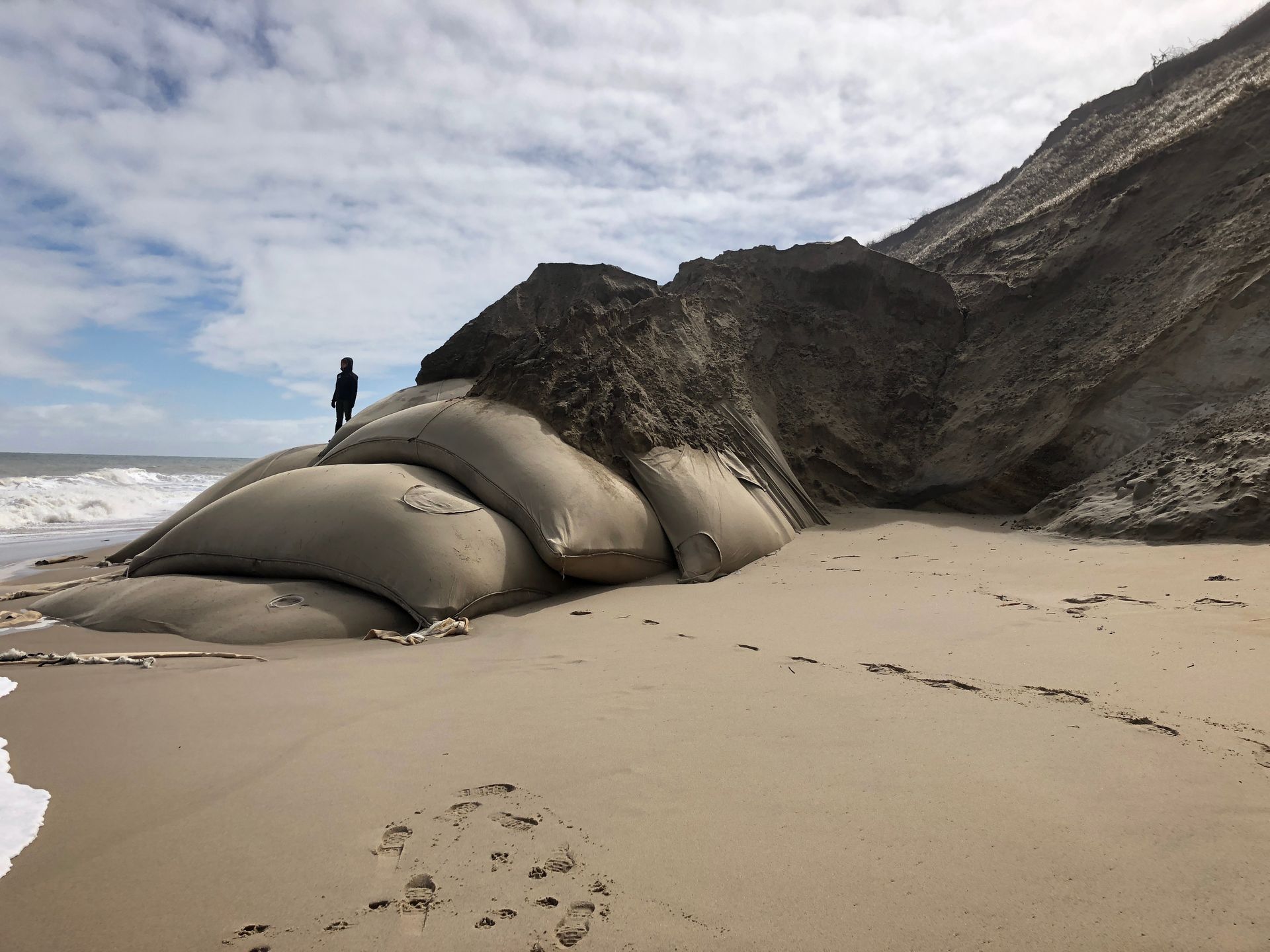
'Sconset geotubes
NLWC has been involved in the debate over erosion control fronting the Sconset Bluff for decades. As an environmental organization, with a mission to protect the island’s land and water resources, our objective has always been, first and foremost, to ensure that environmental impacts are avoided, minimized, and if they cannot be avoided that they are mitigated to the maximum extent possible. We also recognize that this is an extremely sensitive and important issue because it involves the future of real property and infrastructure. We are certainly sympathetic to both private and public property interests in this area.
Article 73 is before us because of a specific provision of our Bylaw, Chapter 67- MANAGEMENT OF COASTAL PROPERTIES OWNED BY THE TOWN, Section 1E, which states that:
Leasing or licensing any Town-owned coastal land to a nongovernmental body for erosion-control protection purposes shall be subject to approval by vote at an Annual or Special Town Meeting.
- This provision was first added to the Bylaw by a citizen’s article submitted by Catherine Stover in 2012, when ATM voted strongly with 72% in favor, to adopt it.
- This provision was amended by a citizen’s article submitted by Spruce (Burton) Balkind in 2018 which added the “nongovernmental body” to the provision, and ATM again voted strongly with 71% in favor, to support it
The NLWC is taking a strong position against this Article for 3 primary reasons:
1. The article as drafted is unnecessarily vague and open-ended.
- It is not limited to the geotube expansion project, as proposed and permitted by the Conservation Commission.
- Instead, it essentially issues a blank check for the beach to be utilized for the construction of anything from soft to hard erosion control structures including bulkheads (which would have tremendous negative impacts, if it could even ever be permitted)!
- The article has no time-frame or sunsetting associated with it. It is completely open-ended which implies that the Town will not have to come back to Town Meeting for approval of any future changes to the use of this public beach. This is unnecessary and not appropriate, especially as the Town has finalized Alternative Access Plans for Baxter Road.
- If this gets approved it would allow this mile long stretch of public beach to be used for any form of coastal engineering structures that are permitted by the Conservation Commission, without limits, now or in the future.
2. The nature of the article, as written, without more specificity, and particularly without a requirement to come back to Town Meeting at any point in the future when the use, or conditions may change, is essentially sidestepping the spirit of Chapter 67-1E which has been supported by ATM twice, and which gives Nantucket citizens a voice for what gets built on our public beach.
- Any changes to how the public beach is being used in the future would no longer be subject to voter approval, and this transfer of authority would remain in effect indefinitely.
3. Finally, perhaps most importantly, we are strongly opposed to this Article because, as the Massachusetts Coastal Zone Management Agency, AND Mass Department of Environmental Protection have made very clear through their comment letters on the proposed geotube expansion, there is entirely too much missing information to determine whether or not the project can even be fully permitted, let alone to determine how extensive the negative impacts may be.
- The Town’s co-applicants have failed time and time again to comply with their commitments and with past permit requirements, so unfortunately we have very little faith that they can be trusted to do so in the future.
For all of these reasons we will be asking Town Meeting to vote NO on allowing our public resource to be used for this project.
For more information on the NLWC’s concerns with the Geotube Expansion Project as proposed by the Town of Nantucket and SBPF, please review the slides prepared by Doug Rose here: Understanding the Proposed Expansion of the Sconset Geotube Seawall
Read comments and concerns from the Massachusetts Coastal Zone Management Agency here:
MA CZM Comment Letter