NLWC News


NLWC Formally Opposes Geotube Expansion

Anna Day • April 20, 2025

The Nantucket Land & Water Council (NLWC) has joined over a dozen Nantucket residents  including members of the Nantucket Coastal Conservancy, property owners in Quidnet, and the Greenhill Family, in filing a Request for a Superseding Order of Conditions (SOC) with the Massachusetts Department of Environmental Protection. 


The Nantucket Conservation Commission voted on March 20, 2025 to issue a positive Order of Conditions (OOC) for the geotube expansion project as jointly proposed by SBPF and the Town of Nantucket (TON). As is the case with all wetland permits, this equates to the issuance of two independent OOCs, one under the MA Wetlands Protection Act, and one under the Nantucket Wetlands Bylaw. 


The Request by the NLWC and the Resident’s Group for an SOC is a formal process seeking the Department of Environmental Protection to issue an SOC denying or curtailing the proposed project in order to defend those coastal wetland resources that are protected under the MA Wetlands Protection Act.


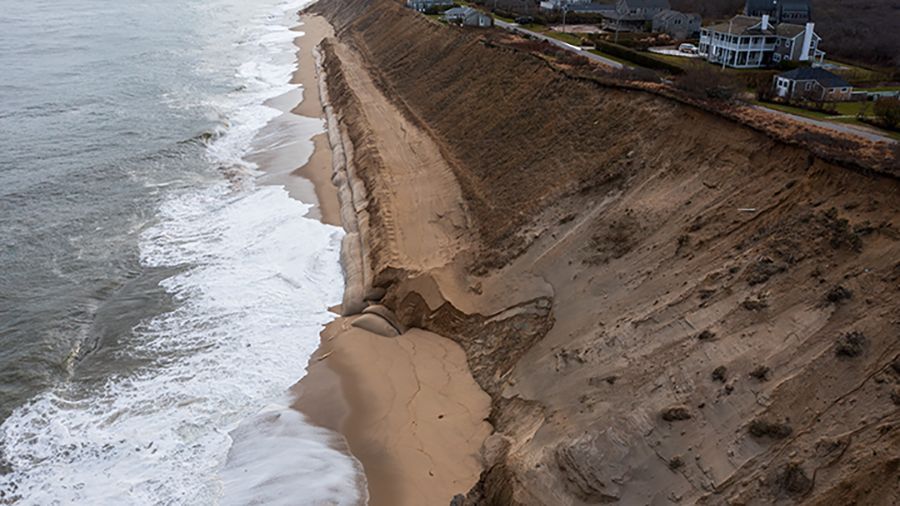
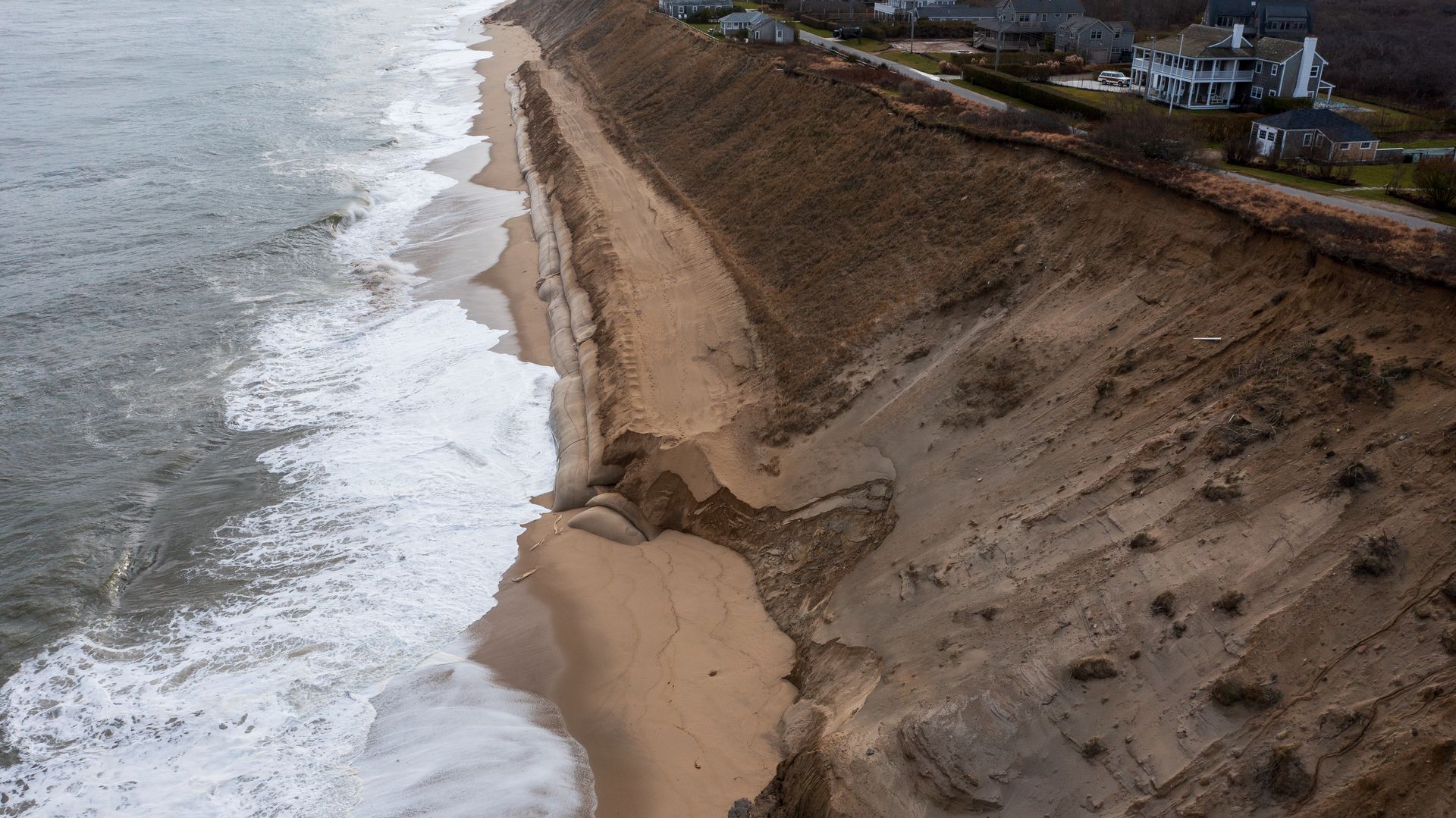
The NLWC’s opposition to the geotube expansion project is based on a number of factors. First and foremost, the NLWC does not believe the project as conditioned satisfies the performance standards in the MA Wetland regulations.  NLWC’s consultant along with the Greenhill family’s coastal engineering consultant, utilized SBPF’s own monitoring data to demonstrate that the existing geotubes have clearly damaged the surrounding public beaches  (at times eliminating a walkable beach in front of the structure) and accelerated erosion of the coastal banks to the North. The existing stretch of geotubes remain out of compliance with their prior permit  as issued by the Conservation Commission due to SBPF’s failure to provide the required mitigation sand since 2016. This violation of SBPF’s permit resulted in a removal order which was upheld by Superior Court and is still outstanding.


“We are honored to join with our partners, the NLWC, to take action to protect and preserve Nantucket’s beaches, especially our public ones,” said Burton Spruce Balkind, President of the Nantucket Coastal Conservancy. “The evidence submitted to the Conservation Commission during the public hearing was undeniable: the existing geotubes are degrading, and will eventually destroy the fronting beach. The same will happen with the expanded geotubes.”


Over the course of the 15-month public hearing process, the NLWC submitted 7 written comment letters in conjunction with their coastal engineering consultant, Trey Ruthven of Sustainable Coastal Solutions, and collectively made many public comments in opposition to this project.


While the NLWC recognizes and appreciates the permit condition requiring SBPF to contribute 105,465 cubic yards of sand to make up for the existing deficit, they have been given up to ten years in which to do so, while the permit itself will be valid for just five years. The NLWC also attests that the mitigation requirements conditioned in this permit for the new geotubes will not be adequate to mitigate the project's long-term impacts. 


“Respectfully, the Town’s partner, SBPF, who will be responsible for this massive volume of mitigation has a very poor track record of providing it, and as the record shows, once these geotubes are installed, they are very difficult to remove despite conditions in permits, escrow accounts, court orders, and agreements with the Town. We have been here before,” said Emily Molden, Executive Director of the Nantucket Land & Water Council.


Additionally, there is a logical alternative for the Town to address its liability and protect the public’s interest along Baxter Road that the NLWC supports.  The NLWC advocates that the Town should proceed with the Baxter Road Alternative Access Plan (which has been completed and can be constructed within 3 years), and in the meantime, temporarily maintain and mitigate the existing geotubes with the addition of softer coir installations in adjacent areas  as needed. This plan will allow for the ongoing protection of residents' access and utilities, as well as access to, and parking for the Lighthouse.


“It does not make sense to simultaneously retreat, through construction of the Alternative Access Plan, and armor the bank, through expansion of the geotubes,” said Molden.


NLWC’s Board Chair Lucy Leske added, "As Nantucket's environmental protection and advocacy organization, NLWC believes that this project is allowing selective private interests to supercede the best interest of all Nantucket citizens and our environmental resources, while at the same time turning nearly a mile of beach into a giant construction project for the next decade, distracting us from the true need to move the road."


The NLWC and co-appellants in the Resident’s Group also raise a number of critical procedural issues with the issuance of the OOC including the lack of sufficient site plans. The Conservation Commission accepted the submission of plans dated October 26, 2022 which do not accurately reflect existing conditions in such a dynamic area.  These plans also lack the stamp of a Professional Engineer registered to conduct business in the Commonwealth. They also contend that several additional state permits were required before an OOC should have been issued, including a Notice of Project Change with Massachusetts Environmental Policy Act (MEPA) and a Chapter 91 License, which is required because the NOI plans show work that would have to occur below the Mean High Water (MHW) mark.


The community will have its own opportunity to weigh in on the Town’s commitment to this project at Annual Town Meeting (ATM) in May. Town Meeting’s vote will be necessary to allow the issuance of a license to SBPF to construct this project on the Town-owned beach below the bluff because of a citizen’s article originally submitted by Catherine Flanagan Stover at ATM in 2012. The project cannot proceed without a positive vote (permission) from Town Meeting. The Select Board is seeking that permission through the adoption of Article #81 at ATM on Saturday, May 3. The NLWC and NCC are urging citizens to vote NO on this article.


Resources:
Throughout the public hearing process the Conservation Commission was provided with a multitude of submissions from the NLWC's Coastal Engineer Trey Ruthven of Sustainable Coastal Solutions, and the Greenhill's Coastal Engineer Dr. David Kriebel as well as members of the public. All of the submissions from the hearing can be found through the Town's website.


We would like to highlight several submissions clearly demonstrating the negative impacts that geotubes have had on the adjacent beach as well as the downdrift coastal bank.


1. Slideshow:
Impact of the Geotube on the Beaches of Nantucket's Eastern Shore, submitted by Dr. David Kriebel on August 2, 2024

2. Report:
Impact of the Geotubes on the Beaches of Nantucket's Eastern Shore, submitted by Dr. David Kriebel on August 2, 2024

3. Visualization:
Quantifying the Sand Deficit & Mitigating Sand vs Downdrift Loss, submitted by Nantucket resident Doug Rose on September 19, 2024

4. Visualization:
Sconset Beach after a Decade of Geotubes, submitted by Nantucket resident Doug Rose on January 10, 2025
December 22, 2025
As the end of the Fall season approaches, we would like to take some time to reflect on Nantucket’s recent Special Town Meeting, held on November 4th. The Nantucket Land & Water Council has been engaged in Nantucket’s discussion about short-term rental (STR) policy and regulation for many years. As an organization, we have, at times, faced questions from residents about the relevance of STRs to the NLWC’s mission . The NLWC’s mission is to help preserve the long-term health of Nantucket’s environment and community through the protection of our land and water resources. Development impacts the environment. This simple fact should come as no surprise. Our actions on the land have a direct impact on the health of our waters. Nutrients like nitrogen and phosphorus from septic systems and fertilizers, along with other contaminants such as those found in stormwater runoff, don’t just disappear. They travel through the soil and into our ponds, harbors, and drinking water. The accelerated development, repurposing of properties, and intensity of use associated with short-term rentals (STRs) as a business put increasing pressure on the island’s infrastructure, reduce habitat and biodiversity, and endanger our water quality. Of course, a community needs to change and develop and grow, but the health of our environment and the ability of a place to naturally support the people who live there are directly related to the intensity and type of development and growth that we, as a community, choose to allow and encourage. The NLWC has always made it clear that we are not opposed to all short-term rentals. We support the ability of island residents to short-term rent with reasonable restrictions. We have, first and foremost, sought to reduce the impact from investor-owned STRs, and reduce the intensity of use and development from properties that are maximized solely for the use of short-term rentals because of the cumulative environmental impacts that this type of use and development creates. We were very disappointed by the November STM vote, which resulted in the full codification of short-term rentals across all residential zoning districts of the island. It is clear that much of the community was incredibly alarmed by the simple messaging provided by Article 1 proponents that asserted this was a matter of maintaining an important property right or losing that right. Alternatively, we, as proponents of Article 2, attempted to communicate a more nuanced message that memorializing this right with reasonable restrictions would actually allow most residents to continue short-term renting in a meaningful way while helping to protect the future of our environment and community. As the dust settles, and our media expresses the reality of the inadequacy of our existing regulations ( https://nantucketcurrent.com/news/nantucket-banned-corporate-owned-short-term-rentals-a-loophole-is-allowing-them-to-continue ) , there is clearly more that needs to be done. All of our policies and practices relative to growth, development, and land and resource management , including STR regulations, must be scrutinized for their impact on our shared natural resources and adjusted where needed to protect the health of our environment and community. It is easy to make the claim that STRs as an issue is not “in our lane” and to suggest that how we use and develop our properties are somehow separate from: PFAS issues, contamination of our public water supply, nutrient pollution, and water conservation , but these are the exact concerns that compel the NLWC to engage in community conversations about growth, development, land use, and STRs. We are the voice for Nantucket’s environment, working to safeguard the present health and future sustainability of the island. This is our lane. We thank all of our members and friends for your support , regardless of your position or vote at STM. We know that, despite differences in opinion, we all share a deep care for this special place and a desire to protect what makes it unique. Together, we can shape policies that reflect both the needs of our community and the limits of our fragile island environment. Your willingness to stay engaged—ask questions, share concerns, and offer ideas—continues to strengthen our efforts. There is more work to do, and we look forward to doing that work with you.
By Anna Day October 27, 2025
At the upcoming Special Town Meeting on November 4th, Nantucket voters will once again consider how best to regulate short-term rentals (STRs). After years of debate, two competing proposals, Articles 1 and 2, offer very different paths forward. The Nantucket Land & Water Council (NLWC) supports Article 2 , which encourages sustainable use of island resources and provides a balanced, long-term solution. Click Here to read the NLWC’s recommendations on the warrant articles. Click Here to read our Letter to the Editor. Join Us and Vote Environment First! Tuesday, November 4 at 5:00 pm in the Mary P. Walker Auditorium of the Nantucket High School.
By Anna Day October 2, 2025
Last week, the appeal hearing for the Surfside Crossing 40B development was conducted remotely by the state’s Housing Appeals Committee (HAC). The NLWC participated as an intervening party to defend clean drinking water for Nantucket. The proposed 156 condo unit development on 13.6 acres known as Surfside Crossing (SSX) off of South Shore Rd is of inappropriate density (13 x the local zoning) and would compromise our drinking water supply. Following the comprehensive permit review by the Zoning Board of Appeals (ZBA) that took place throughout last fall and winter, the application for SSX was unanimously denied by the ZBA. This denial was subsequently appealed to the state by the developers, Jamie Feeley and Josh Posner, in April of this year. During the comprehensive permit review last year by the ZBA, the NLWC hired an engineering expert and water quality specialist to review the project’s stormwater management plans. The review and testimony of these experts revealed that the stormwater infrastructure proposed for the Surfside Crossing development does not meet the specific state and local standards for projects within the Nantucket Wellhead Protection District (the area where groundwater contributes to the public water supply wells), or for projects that meet the state’s criteria as a Land Use of Higher Potential Pollutant Load (LUHPPL). Given recent public well contamination by elevated PFAS levels, it has become abundantly clear that these standards are incredibly important to uphold, especially for a project of this scale within our public water supply recharge area. The local ZBA agreed with the importance of protecting clean water , and asked the developers to address the stormwater management design to ensure that it meets state and local standards and protects not only the residents and direct abutters of the development, but the public water supply that we all share. Unfortunately, the developers refused to make any changes to their proposed design, in part because it would require a reduction in the number of units to make the necessary changes, and in part because they have already installed their stormwater infrastructure, “at risk”, without the benefit of a permit, and without a water quality certificate issued by the Water Commission as required in Nantucket’s Zoning Bylaw. They simply do not want to have to take it back out of the ground. Based on concerns for the health of the community’s drinking water, as well as other concerns relative to public safety and traffic, and considering the developers’ refusal to consider any changes whatsoever to their proposal, the ZBA unanimously denied the project. As an intervening party in the developers’ appeal of the ZBA’s decision, he NLWC has been working closely with the counsel for the Town of Nantucket’s ZBA, and the residents group, Tipping Point, to file written testimony from the NLWC’s engineer, the ZBA’s engineer, and several water quality and PFAS subject matter experts. During the HAC hearing last week, the developers’ counsel chose not to cross-examine any of these witnesses, and so their written testimony stands unchallenged, leaving the hearing office no basis to question their expert opinions. This hearing on the Surfside Crossing matter follows a similar appeal by developers in the Town of Walpole for a Chapter 40B development that was also denied by the Town’s ZBA due to similar concerns over improperly designed stormwater infrastructure, and the degradation of the Town of Walpole’s public water supply. As we await a decision from the HAC, we are grateful to Nantucket’s ZBA for their due diligence during the public hearing process, and for the opportunity to prepare for the appeal hearing in partnership with Town Counsel for the ZBA, as well as the residents’ group Tipping Point.  Stay Tuned for Updates!
MORE NEWS