NLWC News
Eelgrass-Friendly Moorings Installations Begin!
On Monday, June 29th, 2026, the Nantucket Land & Water Council (NLWC) in collaboration with Nantucket Harbormaster Sheila Lucey, Anderson’s Stillwater Moorings, & Nantucket Moorings, officially began installing eelgrass-friendly moorings along our testing site in Nantucket Harbor. Installation has moved forward thanks to a generous grant from the Great Harbor Yacht Club Foundation to support eelgrass-friendly moorings in Nantucket Harbor.
Eelgrass is paramount to maintaining the health and fragile ecosystems within our harbor. Eelgrass meadows aid our water quality by filtering out runoff contaminants, removing excess nutrients, providing necessary habitats for wild bay scallops and juvenile fish species, and helping to combat environmental events like coastal erosion and storm surge.
Traditional moorings utilize a mushroom anchor and a heavy chain that digs into the harbor floor. As wind, tides, and currents move boats and moorings, the
chain drags on the harbor floor creating a circular scour – a place where eelgrass cannot grow.
Eelgrass-friendly moorings are a type of mooring that
protects eelgrass meadows
while allowing us to
continue using and enjoying our boats as we always have. The eelgrass-friendly moorings use a
pyramid style Dormor anchor and an
ecorode elastic rope replacing traditional chain and mushroom anchors. The elastic does not scour, allowing eelgrass to grow sustainably in our harbors.
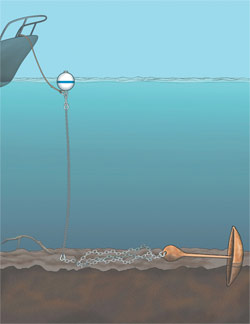
Traditional boat mooring graphic
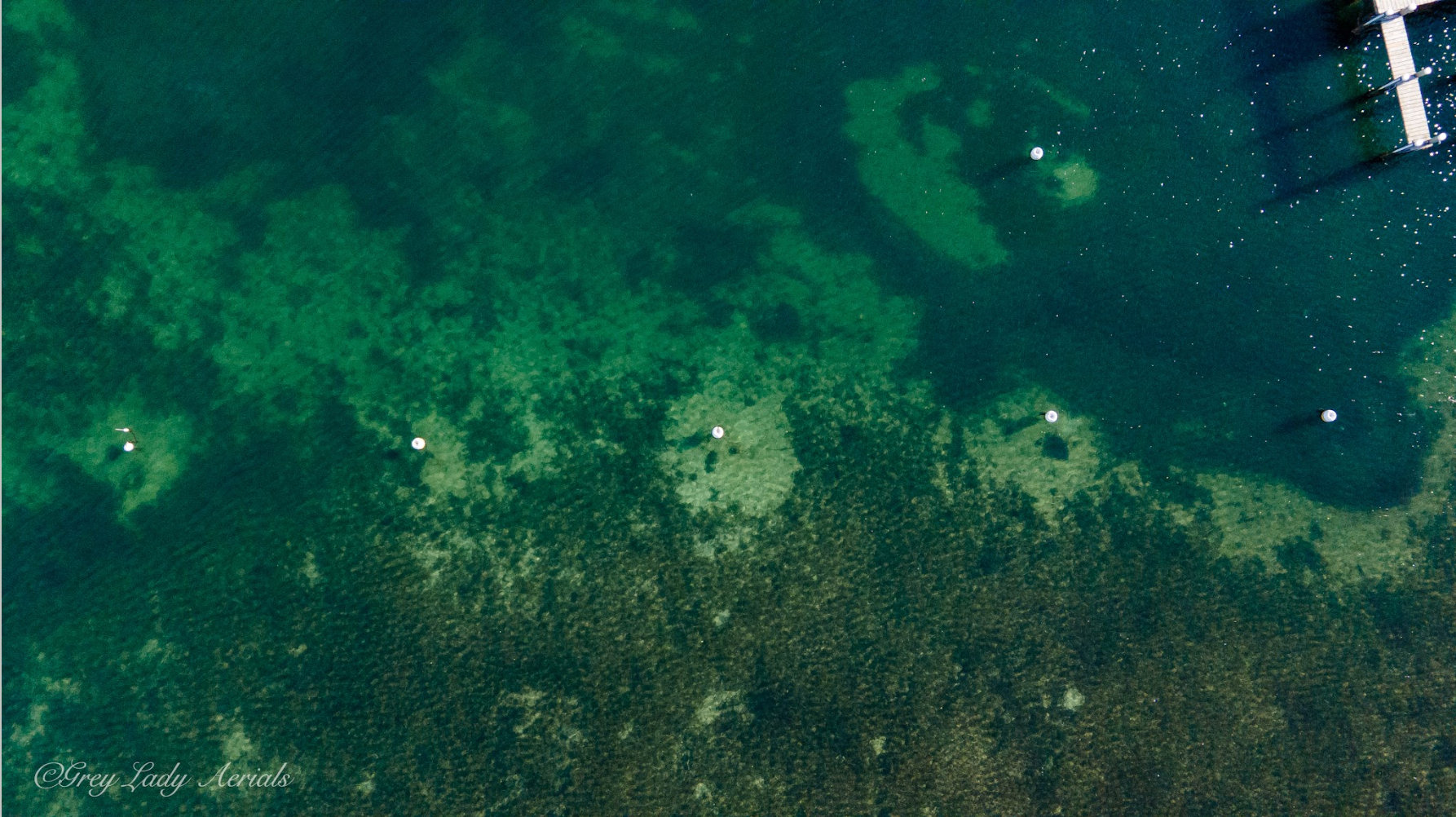
Eelgrass scour image courtesy of Grey Lady Aerials
The NLWC Waterkeeper vessel has been successfully secured using this mooring system for four consecutive seasons. NLWC will monitor the pilot site to measure eelgrass recovery and seabed stability, with the goal of informing future harbor management decisions and expanding the program if successful.
The Nantucket Land & Water Council extends its sincere appreciation to the Great Harbor Yacht Club Foundation for their foresight, vision, and generous support for innovative solutions that protect the island’s land and water through science, advocacy, and community engagement.