NLWC News
2024 Special Town Meeting Recap
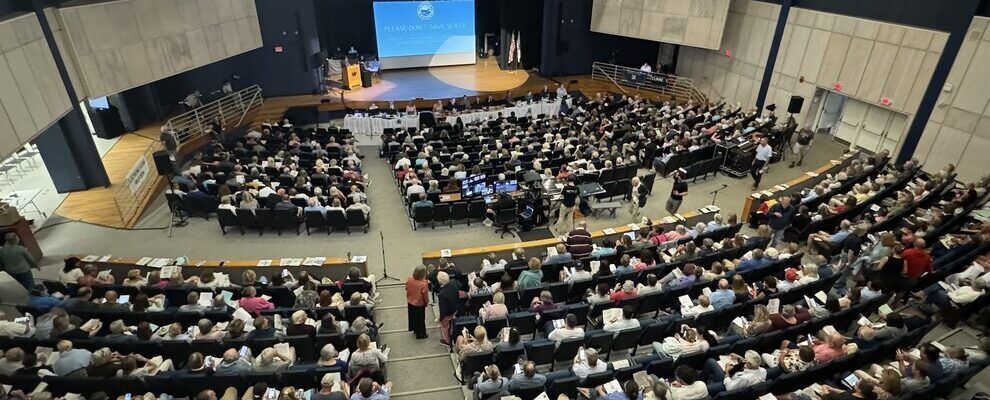
At this September’s Special Town Meeting, the Nantucket Land and Water Council once more encouraged Nantucket residents to vote for the environment by following its recommendations on many of the articles. This year’s Special Town Meeting saw debates continue over matters including short-term rentals (STRs) and zoning changes. The NLWC is pleased to report that nearly all of its recommendations were seen to fruition by Nantucket voters.
In the STR world, voters faced multiple competing proposals to regulate short-term rentals. Article 1, supported by the Select Board, aimed to legalize short-term rentals in all residential districts with limited restrictions. However, concerns about workarounds for the restrictions it did propose and ongoing investor incentives led to its defeat, with 472 votes against and 416 in favor. While the article proposed to impose a limit of one STR per person, an individual would still have the ability to set up any number of other legal entities (in the form of LLCs, trusts, etc) on their own or in partnership with others with each as the owner of separate STRs. As a result, this important provision would not have held water.
Article 2, proposed by Charity Benz and Nantucket Neighborhoods First (NNF), took a more restrictive approach, allowing short-term rentals only as an Accessory Use, requiring property owners to live in their homes more than they rent them. Nantucket Waterkeeper RJ Turcotte read a statement by NLWC president Lucy Leske in support of this article. While Article 2 didn’t pass, it gained significant support, receiving 478 votes in favor and 394 opposed, exceeding 55% approval but falling short of the two-thirds majority needed.
The strong backing for Article 2 reflects growing concern over the impact of short-term rentals on Nantucket’s environment and community.
Article 5, which the Nantucket Land and Water Council (NLWC) supported, was successfully passed. This amendment clarified and strengthened restrictions against corporate ownership of STRs.
Zoning changes which would have resulted in significant subdivision potential, as well as proposals for Town Sewer were also proposed in Articles 11,12,13 and 14 which affected 44 Skyline Drive, and 13/13A Woodland Ave. These changes were not supported by the NLWC because of the significant change in density they would have facilitated in addition to concerns around surrounding infrastructure impacts. The proponents of the articles presented all of them at Town Meeting as key elements in larger plans for affordable housing developments. However, the proponents of the articles did not clearly present their plans for the properties in advance of Town Meeting leaving many questions. This uncertainty and the degree of density proposed for these locations resulted in strong defeat across the board.
Town Meeting also voted strongly in favor of Article 16 which once again proposed to implement specific changes to the constitution of the Nantucket Planning & Economic Development Commission with the intention of creating a more dynamic and diverse planning commission to help the island navigate many of the bigger picture challenges we are facing.
Many thanks to all of our residents who came out to the Special Town Meeting to engage in these discussions and to vote!